
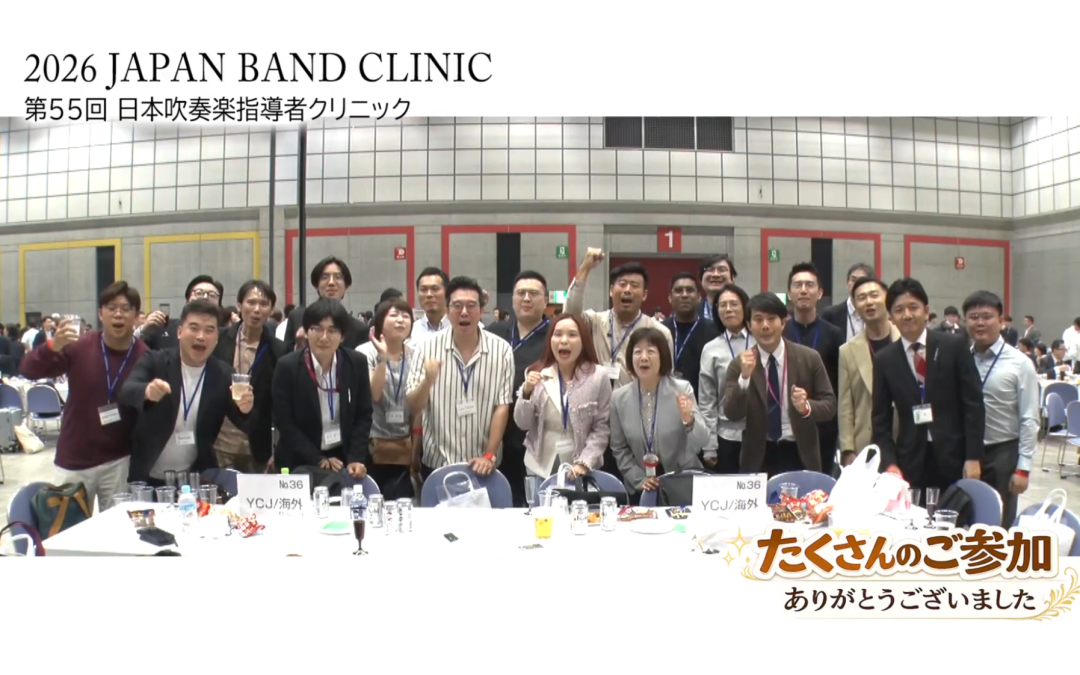
From 14-19 May 2026, Yamaha Music (Asia) invited a group of Singapore Band Directors to attend the 55th Japan Band Clinic, which took place in Act City Hamamatsu in Shizuoka Prefecture.
The Japan Band Clinic is held every May, and is organised by the Japan Band Clinic Committee, which consists of many of Japan’s most prominent and influential Wind Band figures. The Clinic is Asia’s largest conference for Band directors, containing many events surrounding Japanese Wind Band. Events range from instrumental exhibitions and conducting classes, to a concert at the end of every day, featuring some of the most prominent wind bands all across Japan. The concerts feature school bands from a wide variety of ages, from beginning Elementary school ensembles to seasoned High School Bands and even Professional Military Bands.
Over the years, Yamaha Music (Asia) has been organising trips to the Japan Band Clinic, inviting various levels of Band Directors from Singapore to attend each year. This year, 16 Singaporeans would have the opportunity to experience Japan Band Clinic in person. While some may have attended before and might even be familiar with the Japanese Wind Band scene, many of the band directors are also attending for the first time.
Band Fusion volunteer Nicholas Loh reports.
The itinerary commenced ahead of the official clinic dates with a series of exclusive site visits organized by Yamaha Corporation Japan (YCJ).
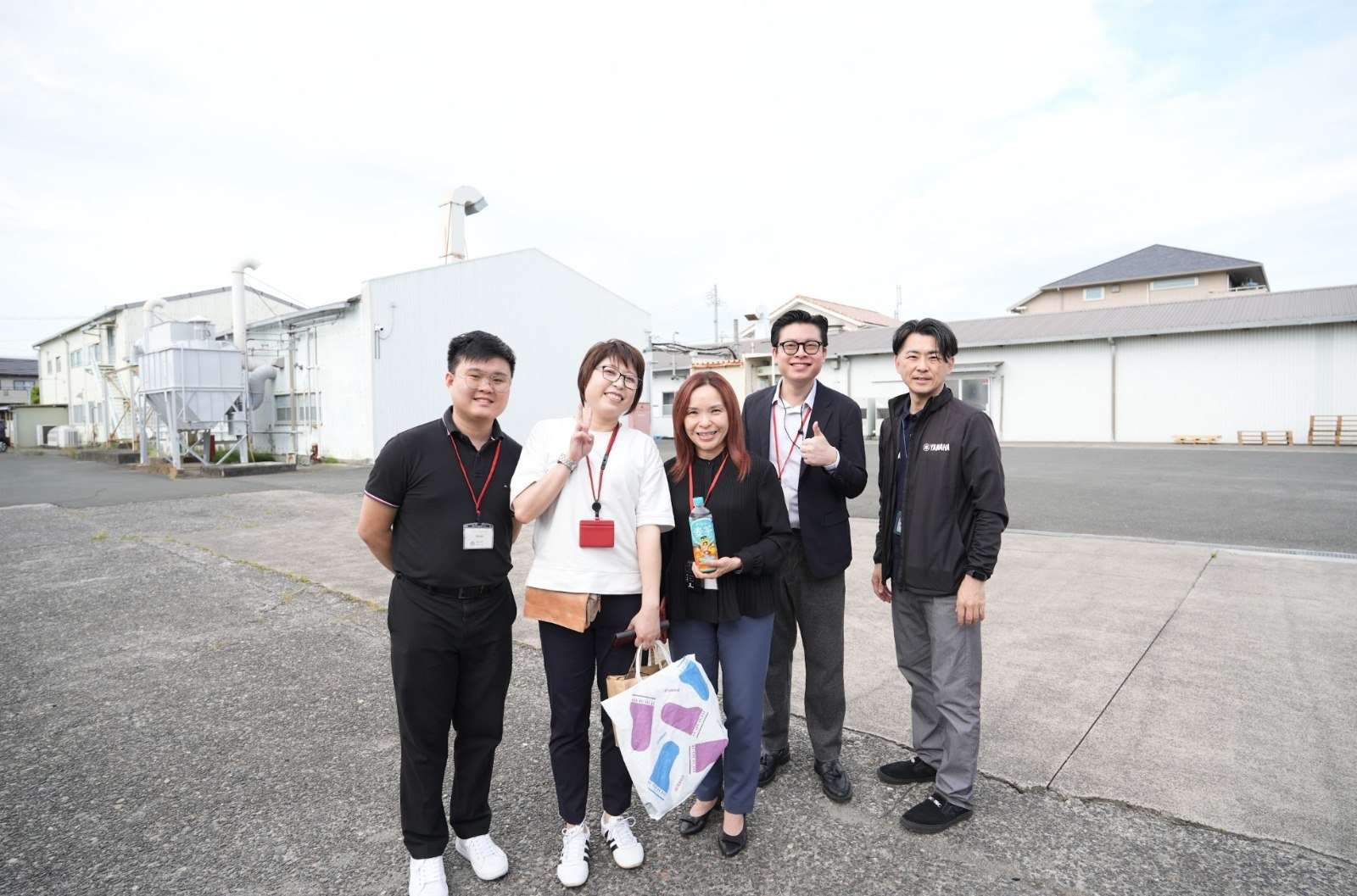
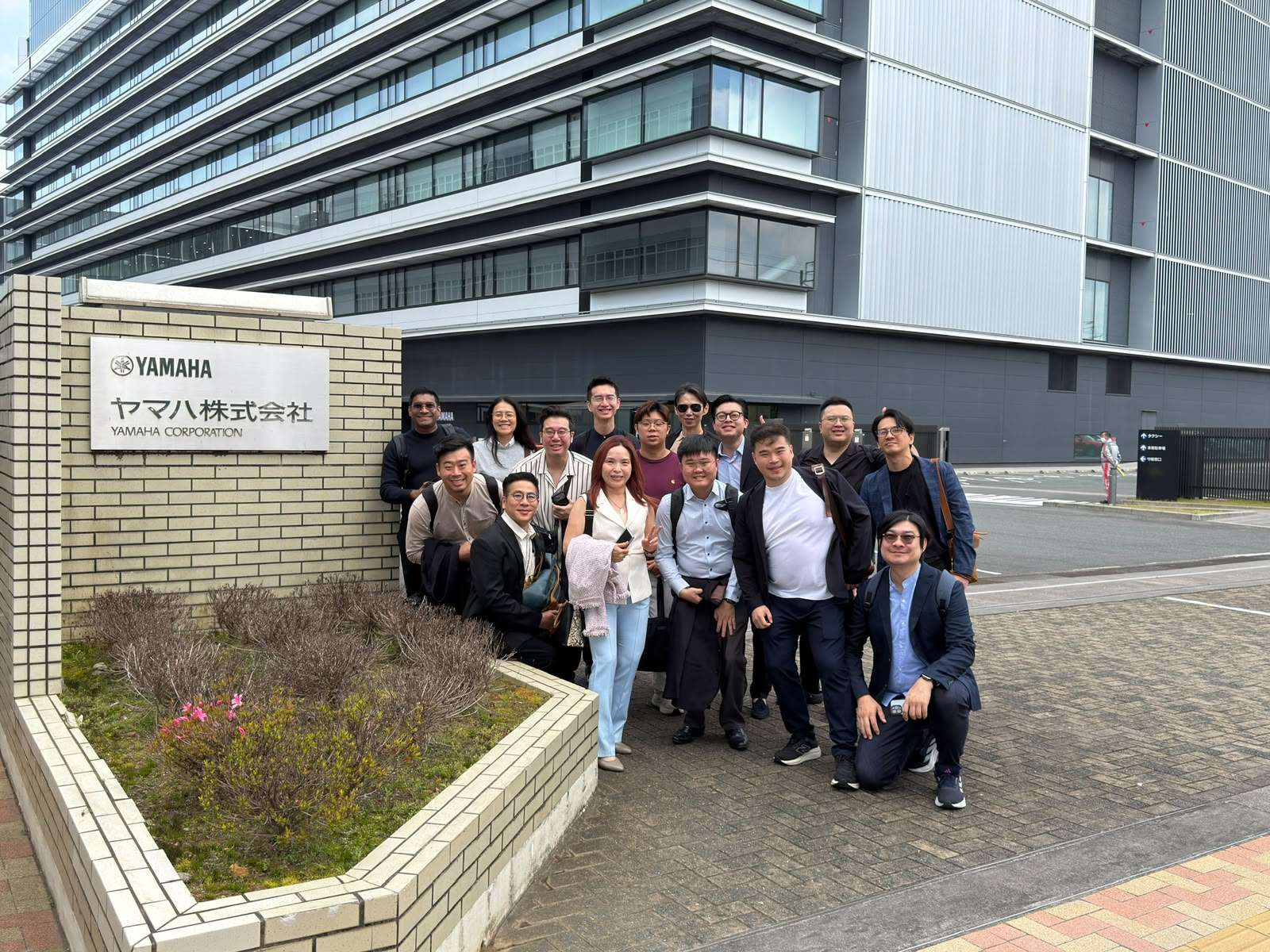
Traveling alongside other international Yamaha delegations, the Singaporean team arrived at the Yamaha Toyooka Factory – the manufacturing birthplace of the brand’s premier wind and brass instruments.
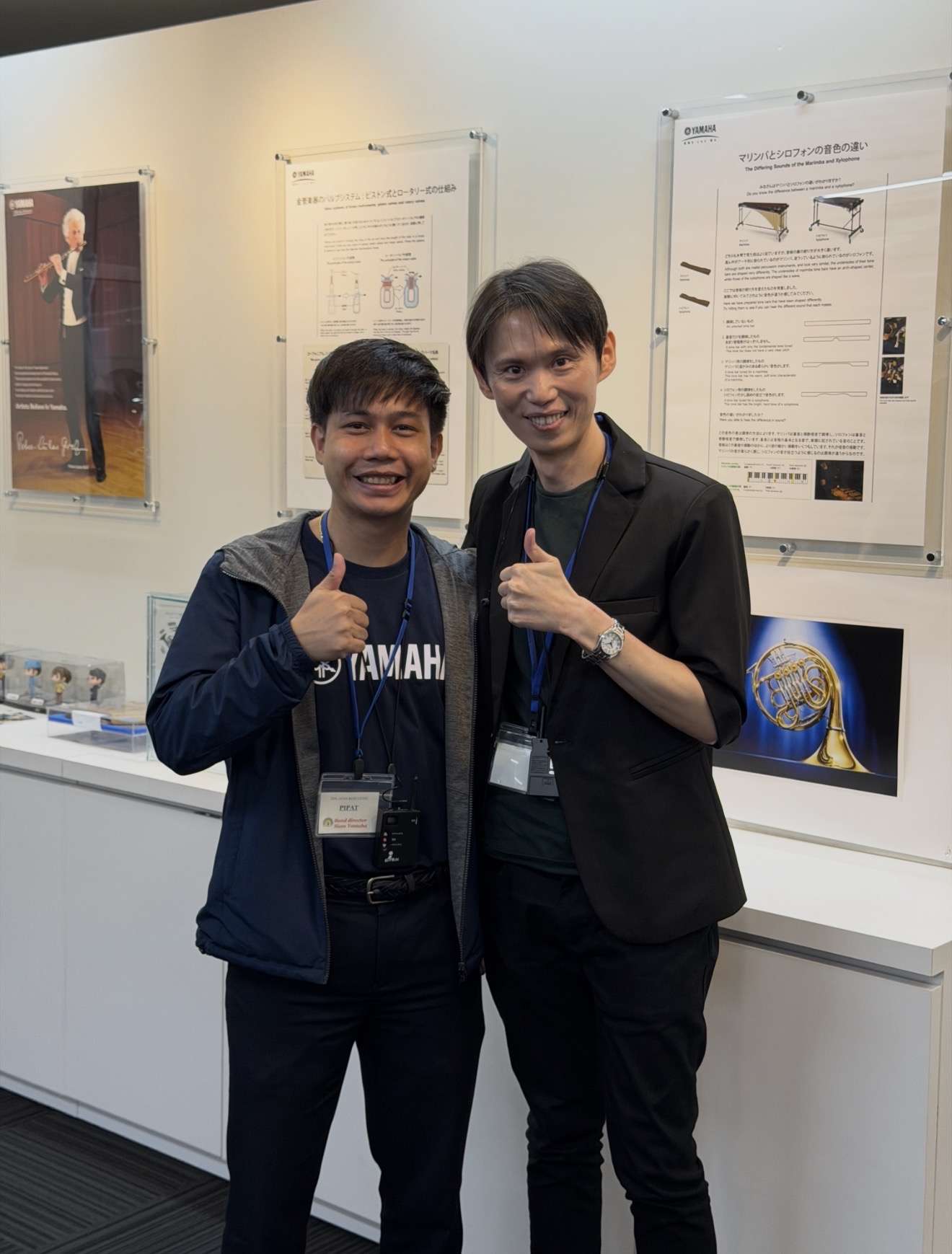
While waiting for the remaining regional delegations to arrive, the band directors were ushered into a historical section in the main building that housed a fascinating collection of vintage and landmark Yamaha instruments. This pre-event gathering quickly turned into a vibrant networking session, offering the Singaporean educators an early opportunity to mingle and build cross-cultural connections with fellow conductors from all across Asia.
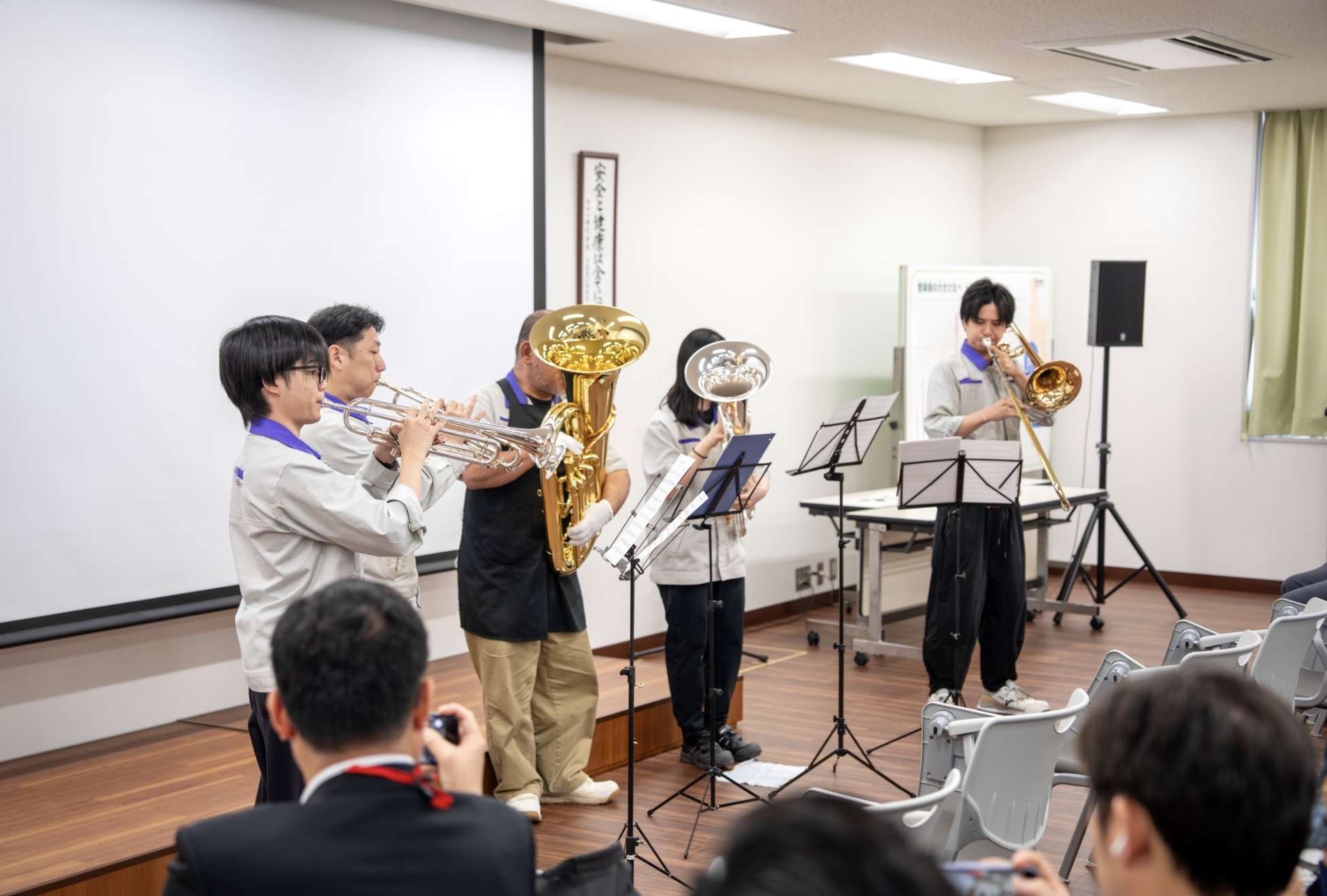
Upon arrival, the guests received a brief introductory orientation before being treated to a surprise performance of “Dream Solister,” delivered live by members of the acclaimed Yamaha Symphonic Band.
Following the performance, the delegation began a comprehensive two-hour guided tour of the compound.
The experience allowed the band directors to trace the entire manufacturing lifecycle of various woodwind and brass instruments, from their raw beginnings as sheets of brass and barks of wood to the final hand-engraving and polishing of the fully assembled bodies and keys.
The production line highlighted a seamless hybrid framework between automation and human artistry across the facility’s buildings.
While heavy machinery handled repetitive and precision tasks, human specialists were trusted with the finer detailing work, including intricate saxophone engravings, component assembly, and the rigorous final play-testing of every completed instrument.
During the tour, the team also learned about the facility’s sustainability initiatives; despite the heavy chemical and material demands typically associated with instrument manufacturing, Yamaha has heavily re-engineered its pipeline to ensure an entirely eco-friendly production process.
After the factory tour and a brief lunch stop, the directors transitioned to the Yamaha Iida Factory, a facility specializing in orchestral percussion.
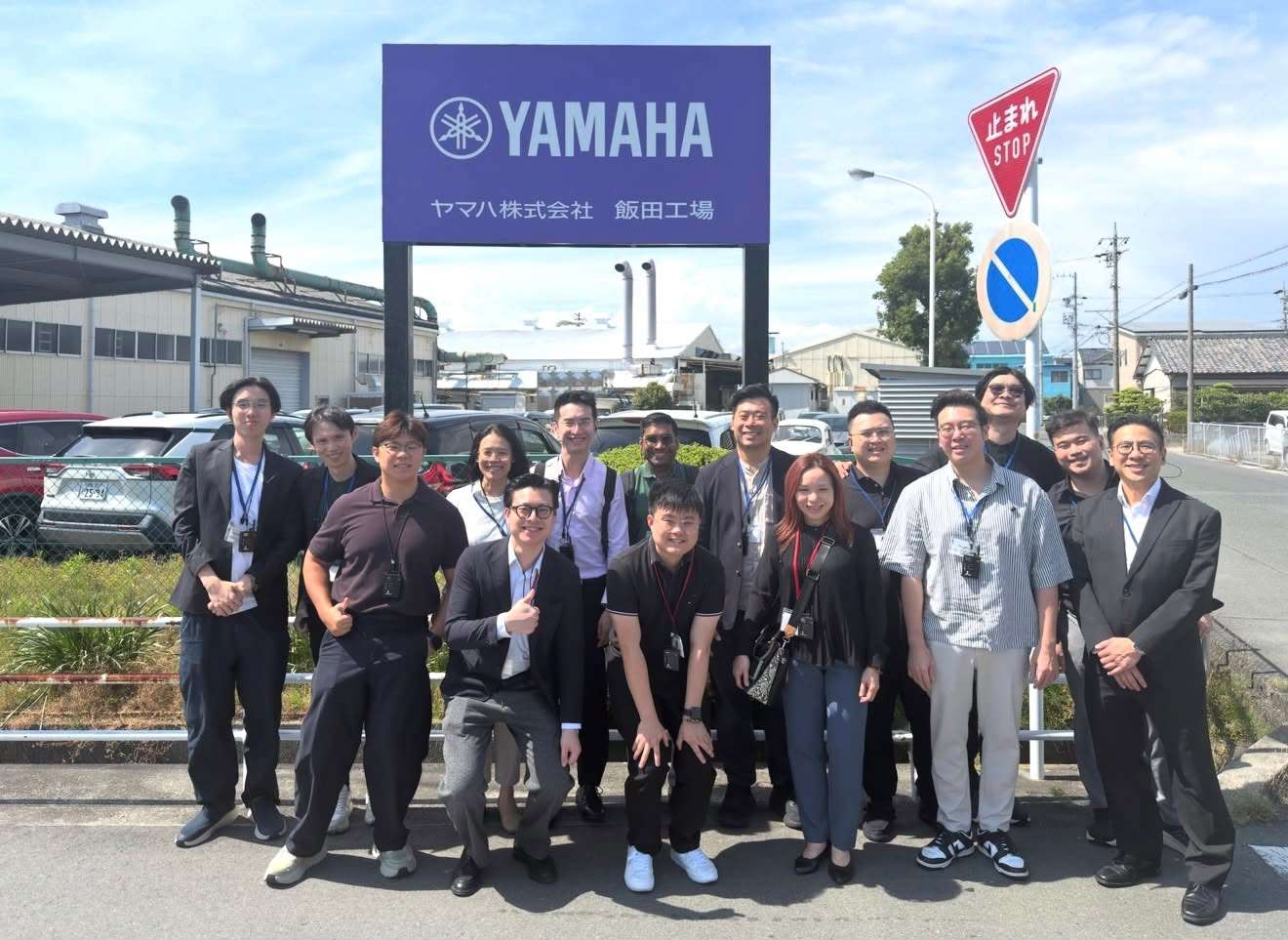
There, the team walked the manufacturing lines to observe the structural fabrication and precise acoustic tuning of heavy percussion instruments, including timpani and marimbas.
For the third stop of the itinerary, the Singapore delegation reunited with Siam Yamaha (Thailand) at Hamamatsu Shugakusha Junior and Senior High School.
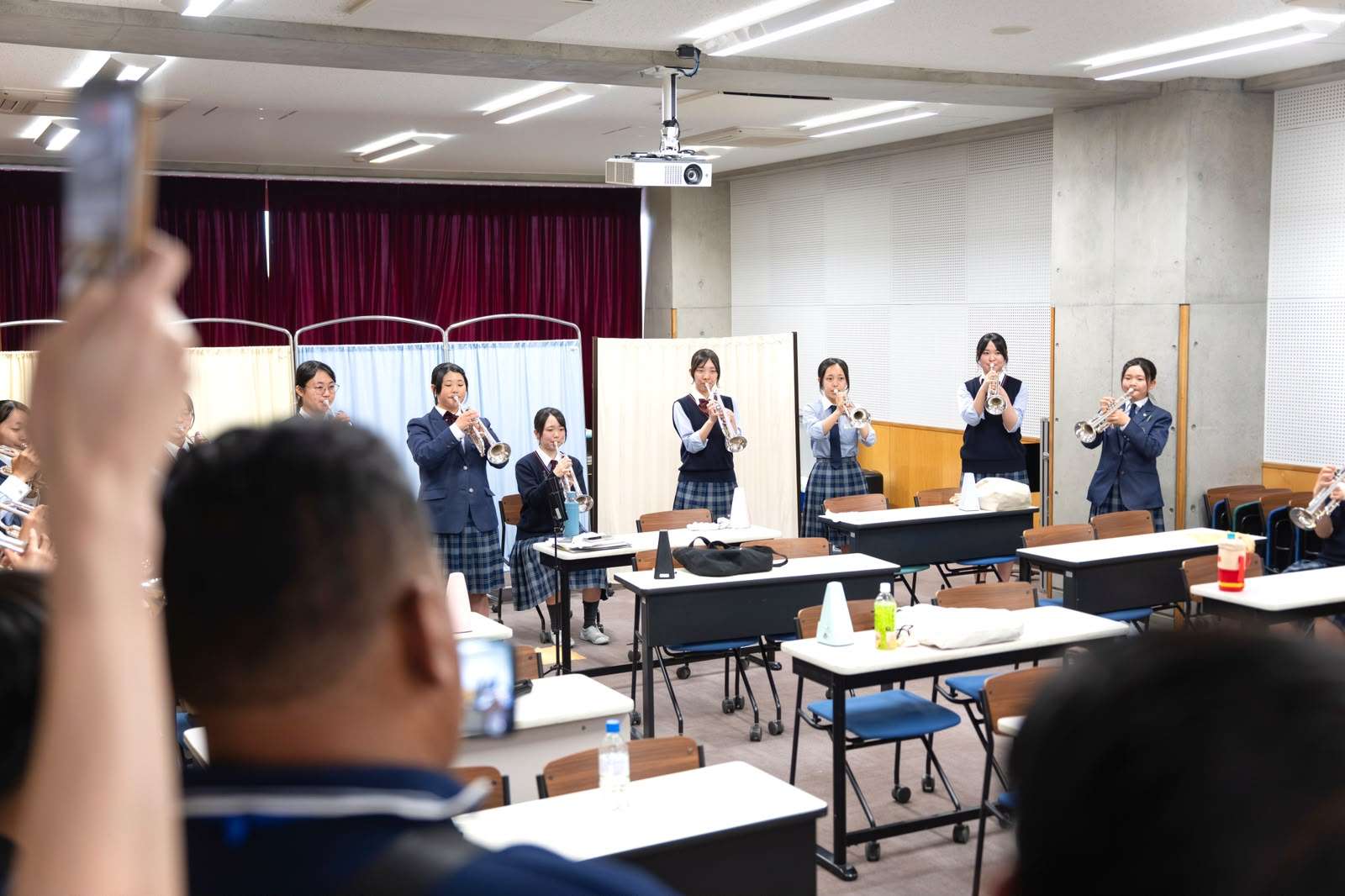
There, the directors were granted a rare, behind-the-scenes look into the daily training regimens of a top-tier Japanese school band.
Following a brief introduction by the ensemble’s director, Mr. Kotaro Kato, the visiting educators were invited to explore the music building, moving from room to room to observe the different instrumental sections running their own independent rehearsals.
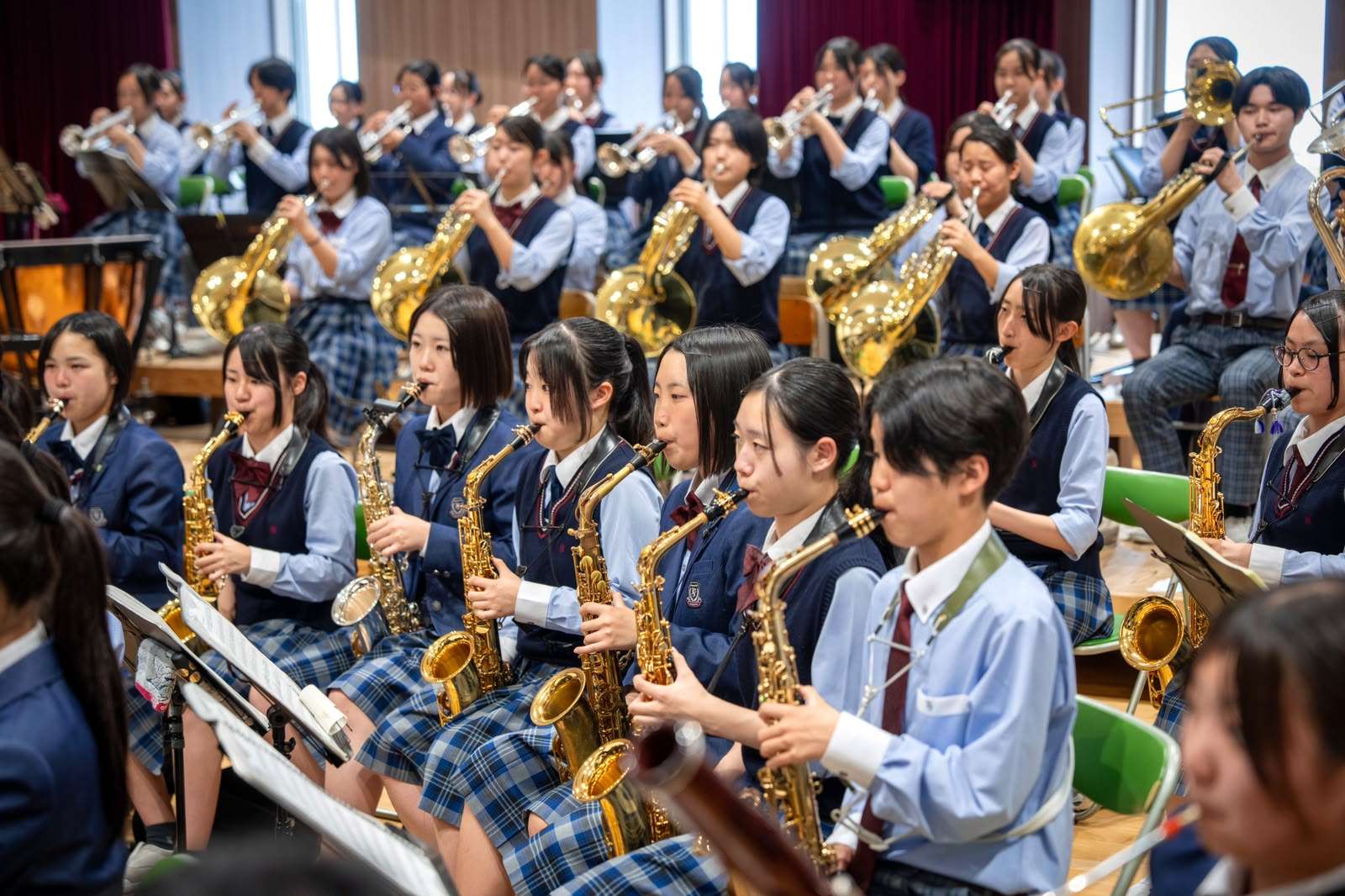
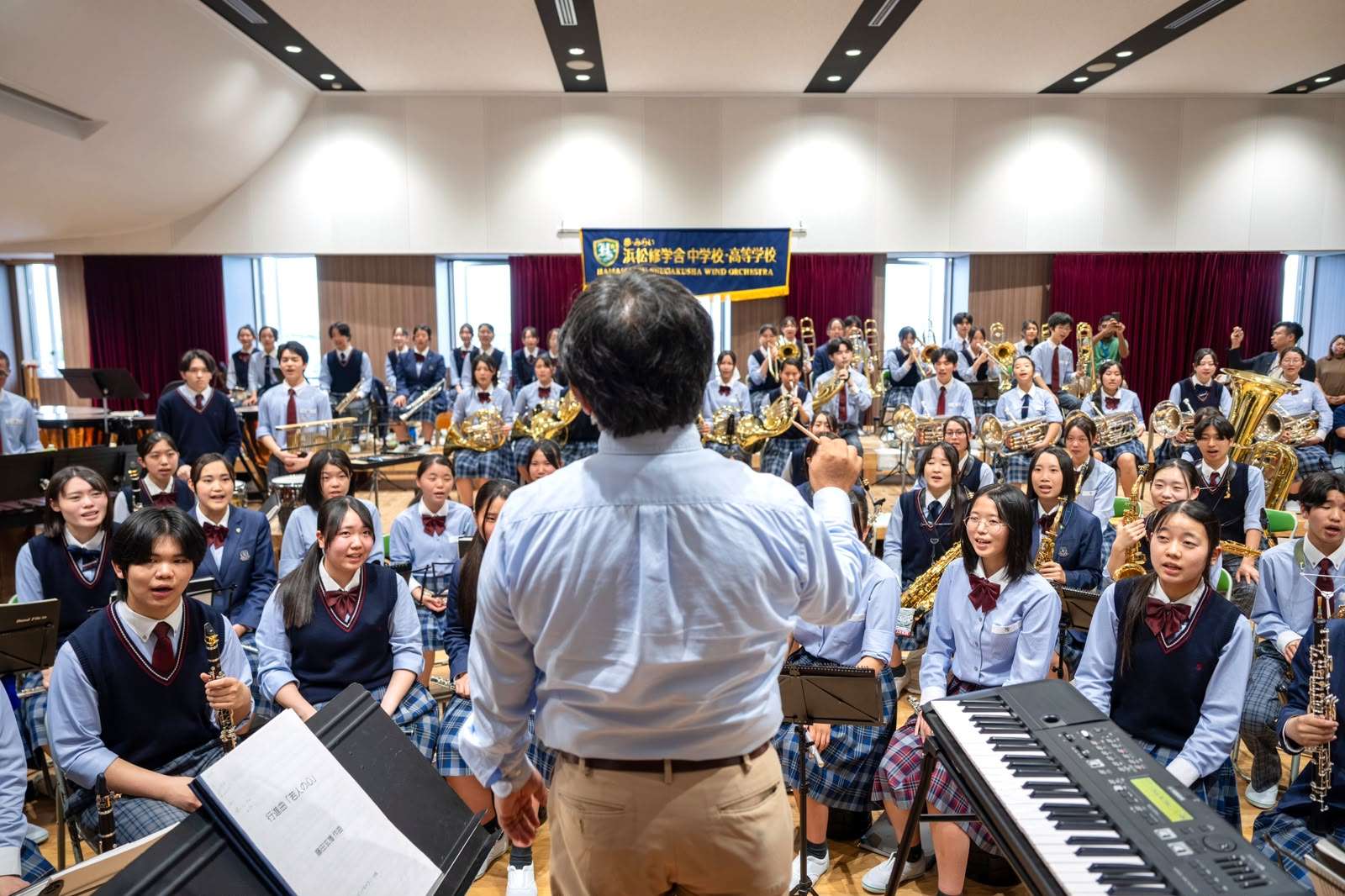
Following the sectionals, all the members gathered in the main band room for a one-hour combined rehearsal.
With more than 120 musicians playing together in the space, the sheer volume and acoustic clarity of the ensemble was nothing short of spectacular.
Before departing, the guests were treated to a final high-energy showcase that seamlessly blended vocal numbers, pop medleys, and synchronized dance choreography.
To conclude the opening day, the various regional delegations gathered for an official welcome dinner hosted by Yamaha Corporation Japan.
The evening served as a prominent networking forum, bringing together music education representatives from Japan, Taiwan, South Korea, Thailand, and Singapore.
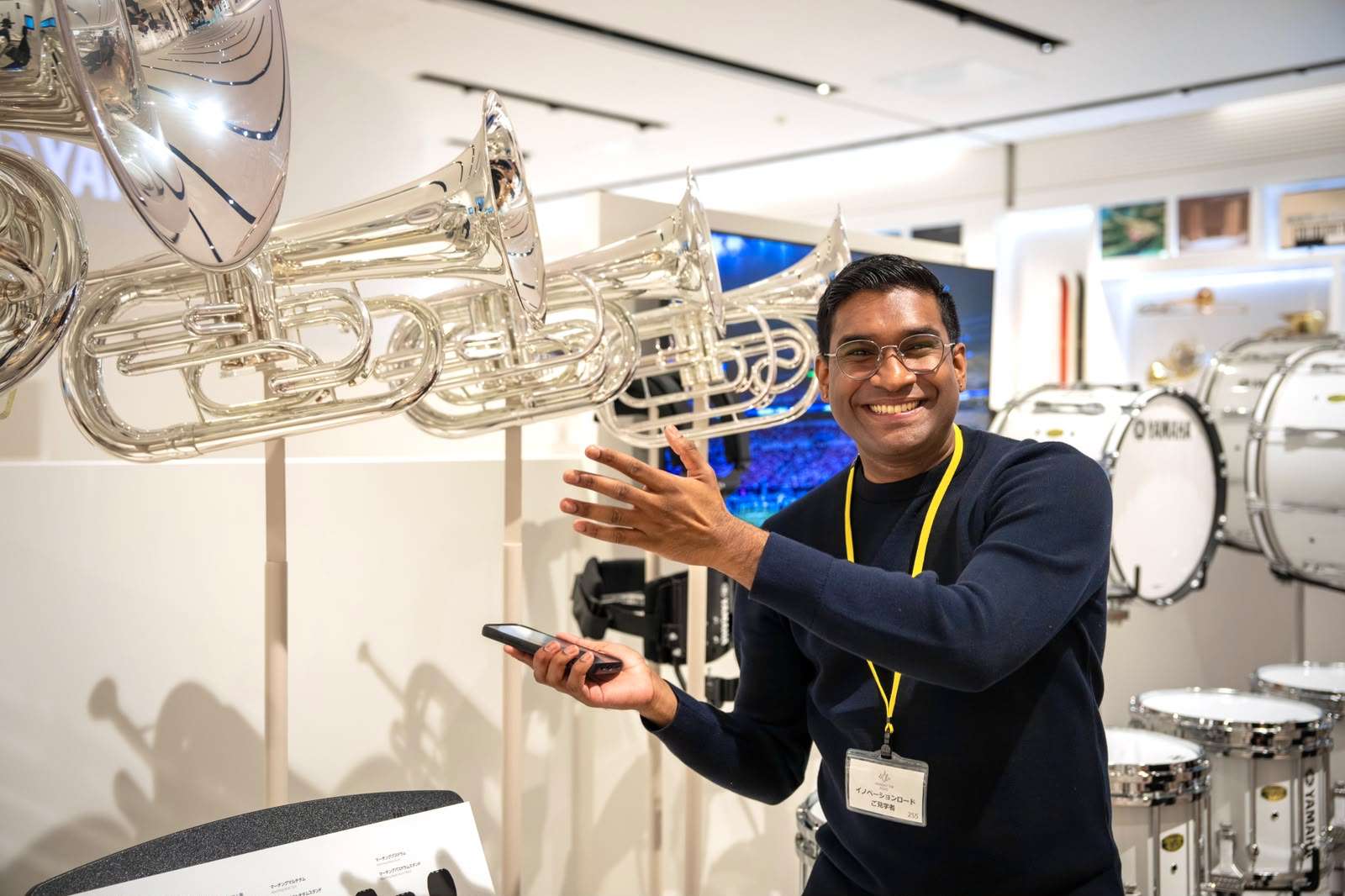
On the morning of the clinic’s official opening day, the band directors made a stop at Yamaha Innovation Road, an interactive corporate museum showcasing the brand’s cutting-edge musical instruments and audio technologies.
The exhibition hall housed a massive display tracking Yamaha’s manufacturing legacy, spanning from historical early designs to current commercial products.
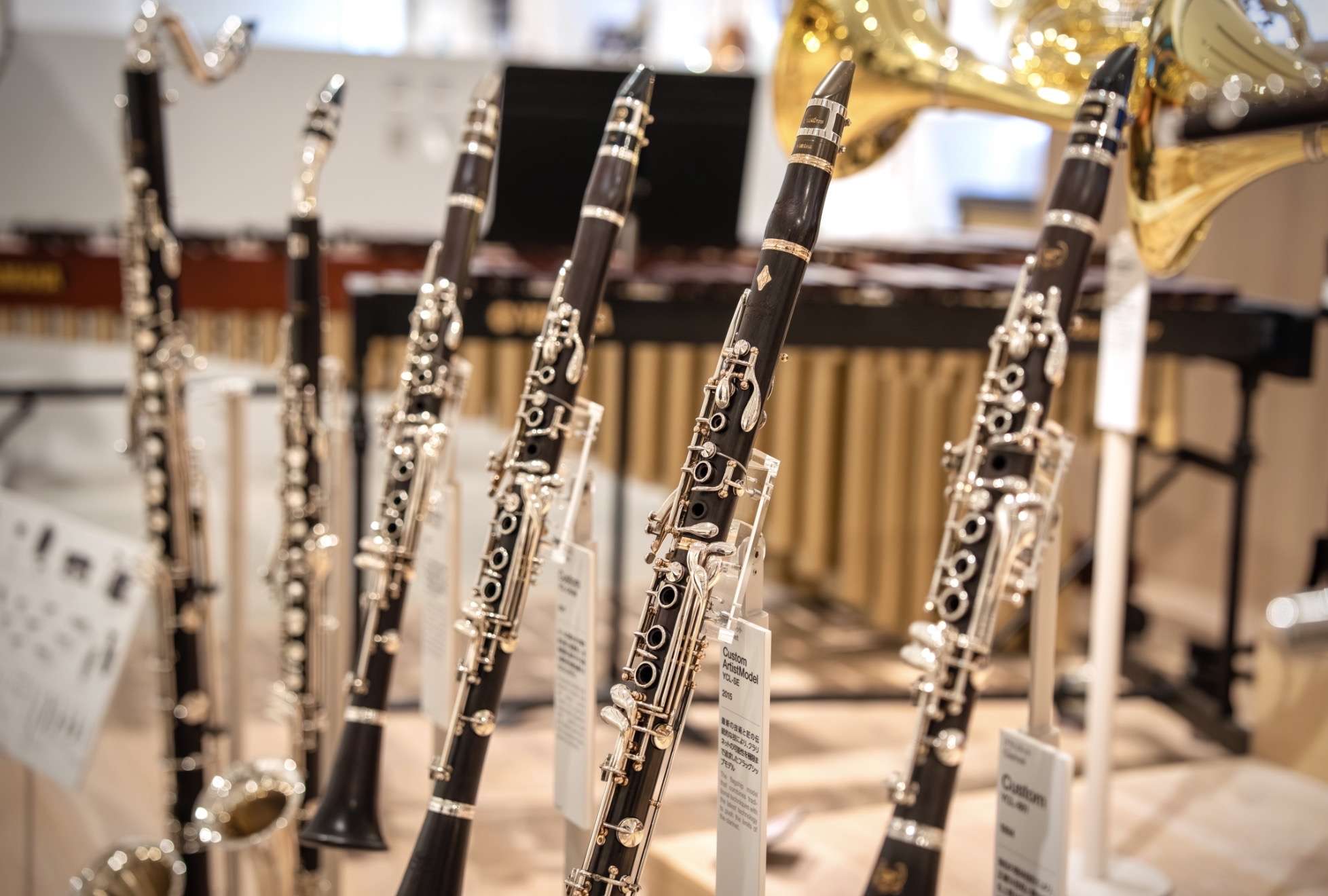
The delegation explored a sprawling, interactive showroom where the walls were covered with disassembled instruments on display, alongside dedicated percussion and keyboard stations open for hands-on trial.
At the rear of the hall, a specialized showroom highlighted Yamaha’s latest immersive surround-sound audio systems, streaming high-fidelity performance videos of the Yamaha Symphonic Band.
Following the brief museum visit, the team transitioned to Act City to complete their registration and collect their official JBC materials, which included the comprehensive Japan Band Clinic textbook, promotional posters, event gifts, and individual lanyards.
With the logistics completed, the band directors were given the freedom to split up and customize their schedules, attending the specific workshops and technical sessions that aligned with their professional interests.
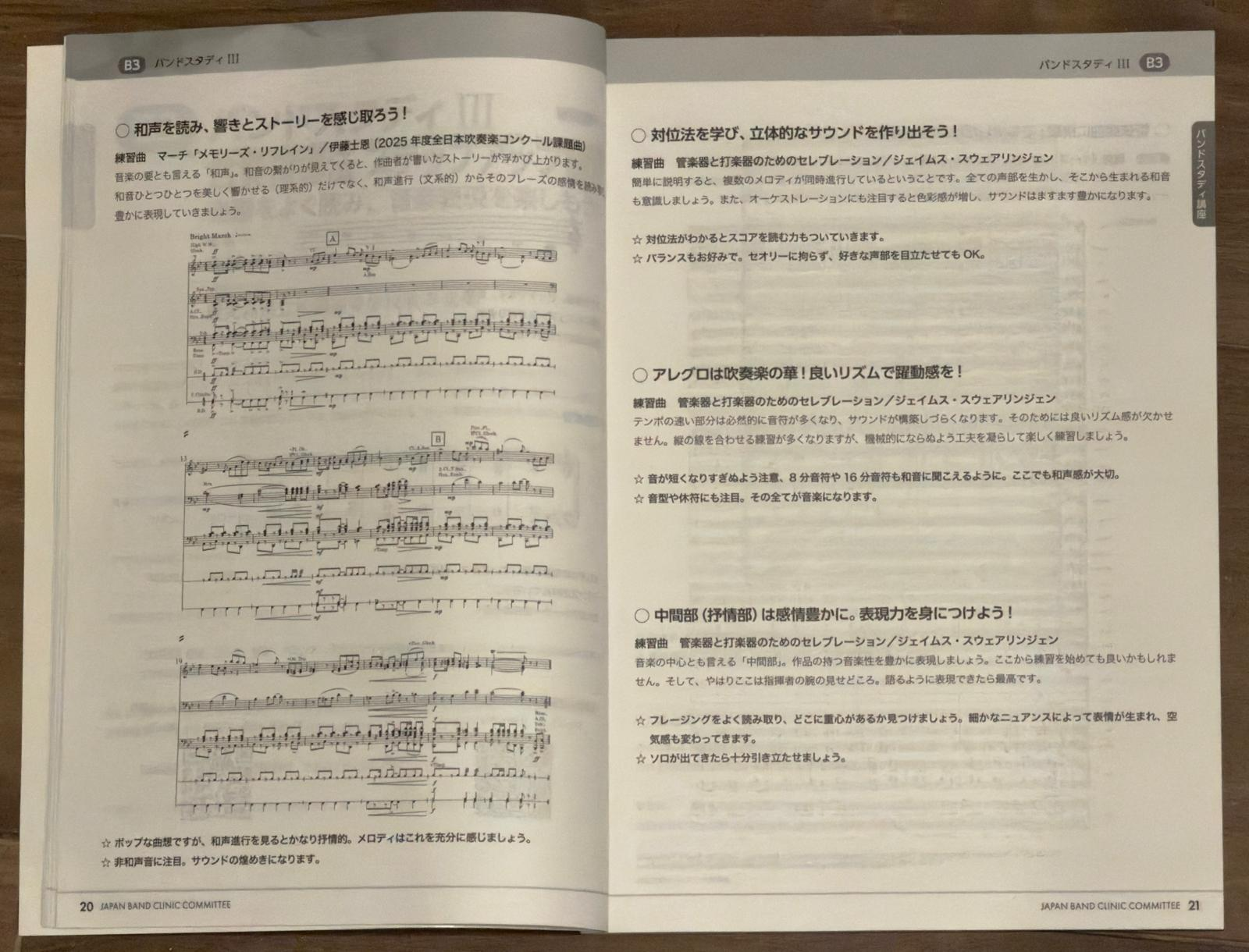
Although the workshops were conducted exclusively in Japanese, the Singapore delegation benefited from the translation assistance of Mr. Keiichi Kurokawa from YCJ.
A prominent figure in the Japanese wind music scene, Mr. Kurokawa is an active band director, composer, and arranger whose acclaimed arrangement of Alexander Borodin’s “Polovtsian Dances” is a regular feature at the Japan Band Clinic.
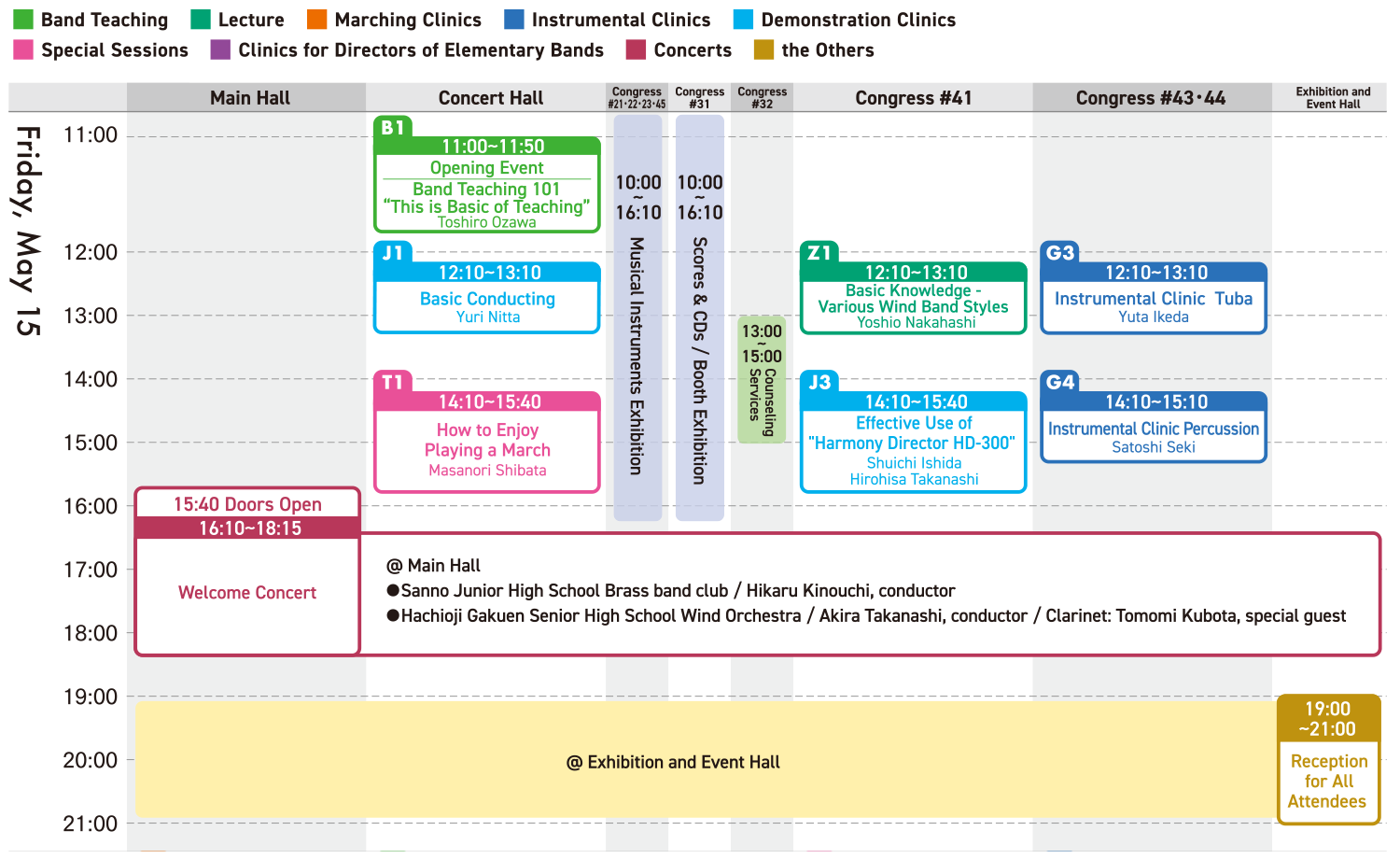
Among the initial sessions was a 90-minute rehearsal clinic titled “How to Play a March,” fronted by clinician Masanori Shibata and the Japan Ground Self-Defense Forces (JGSDF) Central Band.
The masterclass offered attendees a first-hand look at professional concert march preparation, focusing on stylistic interpretation, articulation, and structural phrasing variations.
A dedicated segment featured the JGSDF percussion section, who shared practical insights on their foundational role within a march framework.
Their demonstrations highlighted tonal manipulation techniques for various drums and illustrated how an ensemble’s overall balance and acoustic color shift based entirely on an individual player’s physical touch and mallet selection.
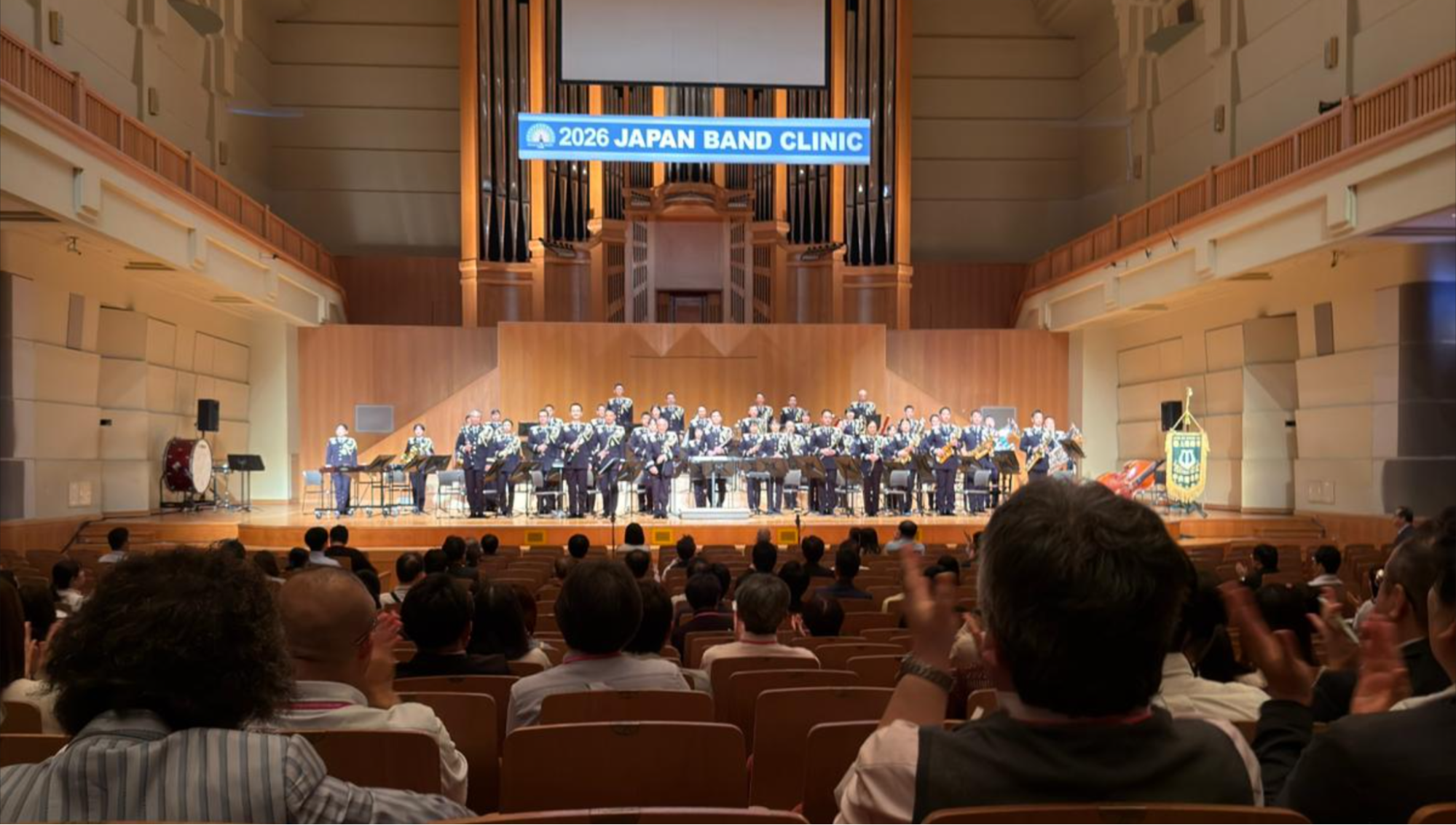
To close out the first day, the directors regrouped in the main auditorium for the opening evening concert of the Japan Band Clinic.
Following a brief welcoming ceremony featuring the JBC Committee and the Sanno Junior High School Band, the packed hall took in a highly anticipated headline showcase by the Wind Band Club of Hachioji Gakuen Senior High School, under the baton of Akira Takanashi.
As a rapidly rising star in the Japanese school band scene, having secured consecutive Gold prizes at the recent All-Japan Band Competitions, the ensemble’s featured performance stood out as a major highlight for the convention’s attendees.
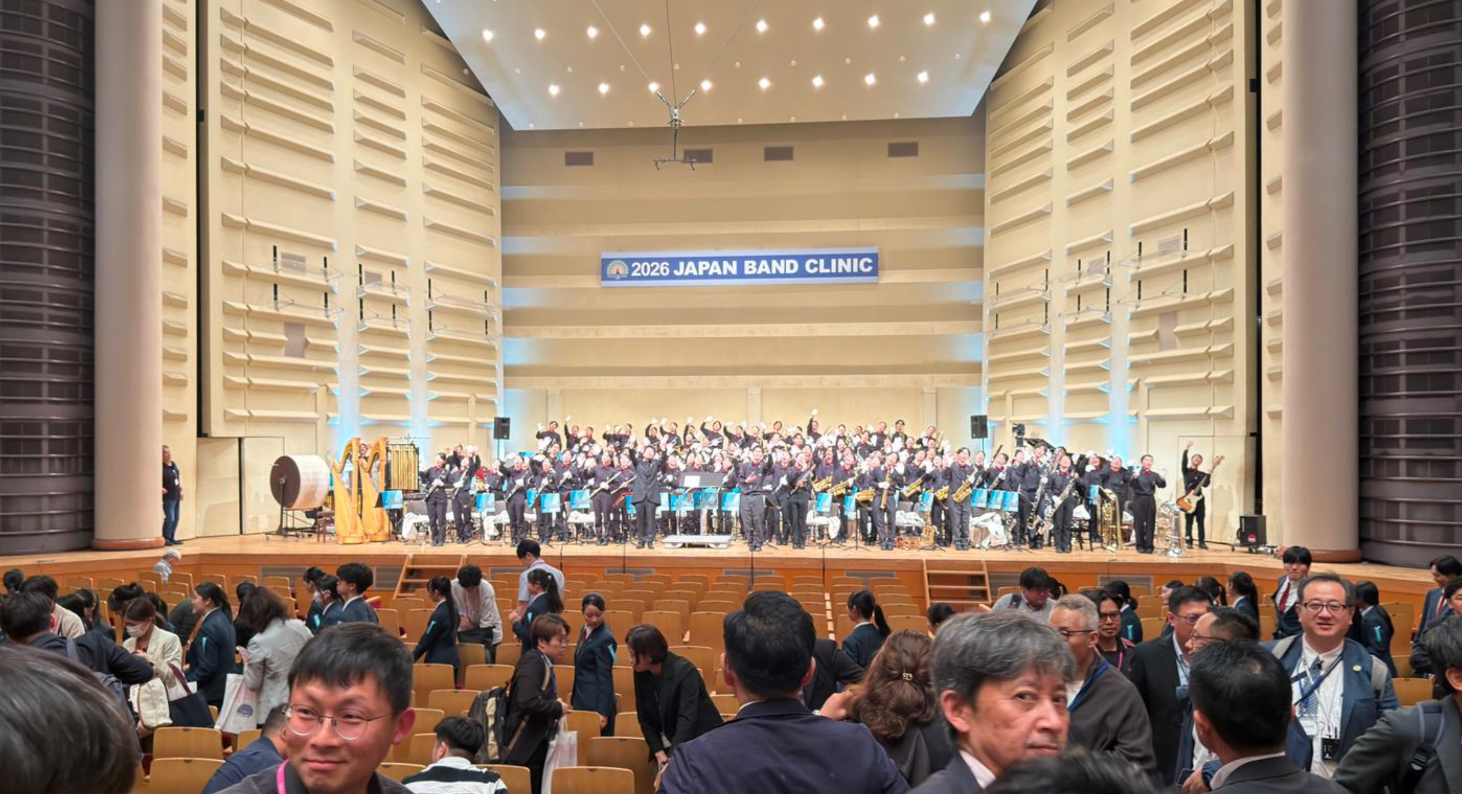
Throughout the concert, the ensemble delivered an ambitious repertoire program performed with an exceptional level of technical skill and artistic maturity.
The selection showcased formidable wind band classics, including Alfred Reed’s Symphony No. 3, alongside notoriously challenging technical landmarks like Philip Sparke’s Music of the Spheres and an arrangement of Respighi’s Feste Romane.
The program also featured Reed’s Rahoon, spotlighting Yamaha Clarinet Artist Tomoni Kubota as a guest soloist.
To close the evening, Hachioji Gakuen shifted gears with a custom-arranged pop medley titled HACIGAKU Beeeet!, earning thunderous applause from the audience.
This high-energy finale spotlighted an iconic element of Japanese wind band culture, where top school ensembles pair complex pop arrangements with intricate, synchronized stage choreography executed seamlessly while playing their instruments – a presentation style that stands out as a unique educational highlight for international visitors.
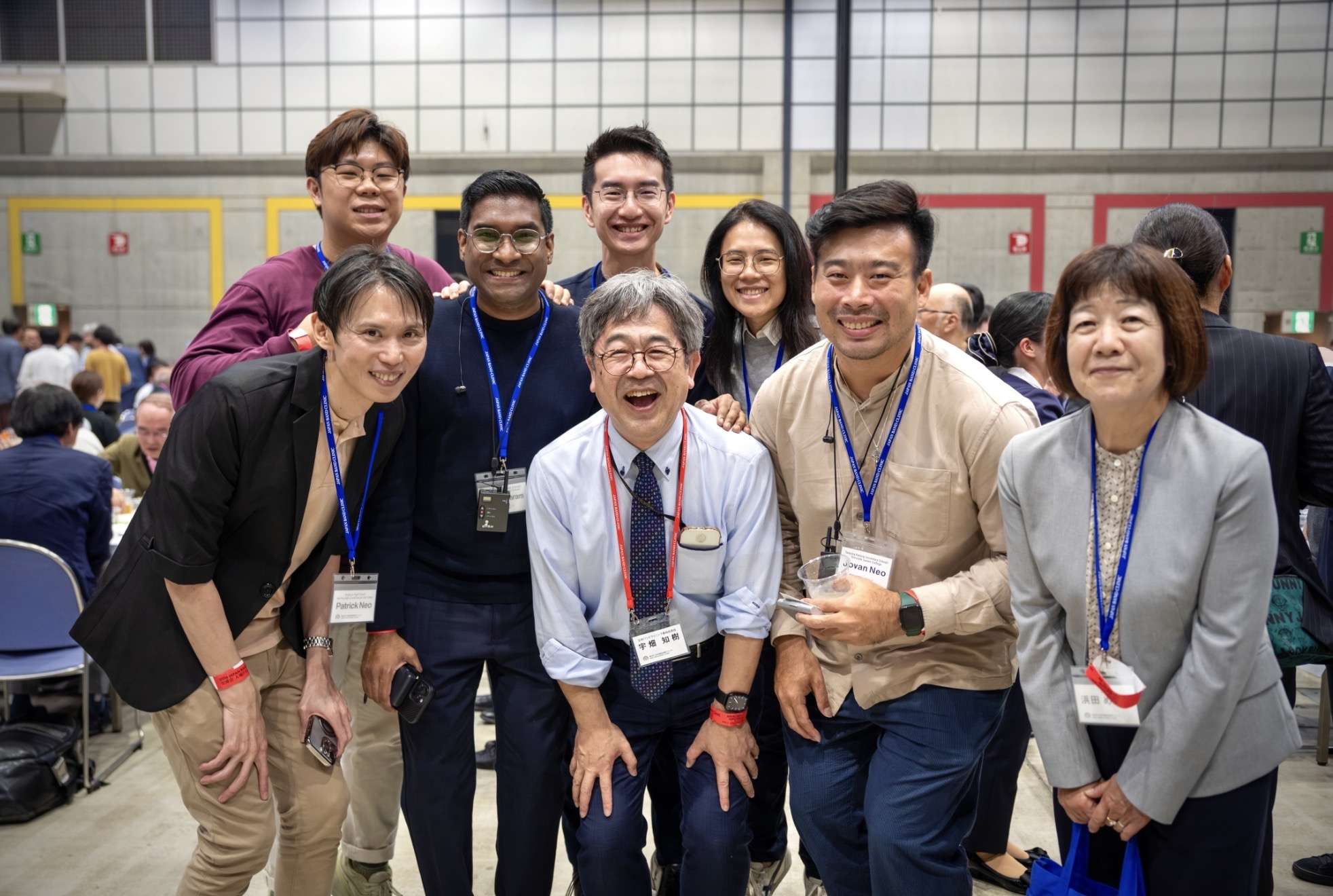
Following the final curtain call, the audience moved to the exhibition hall for a dedicated welcome reception.
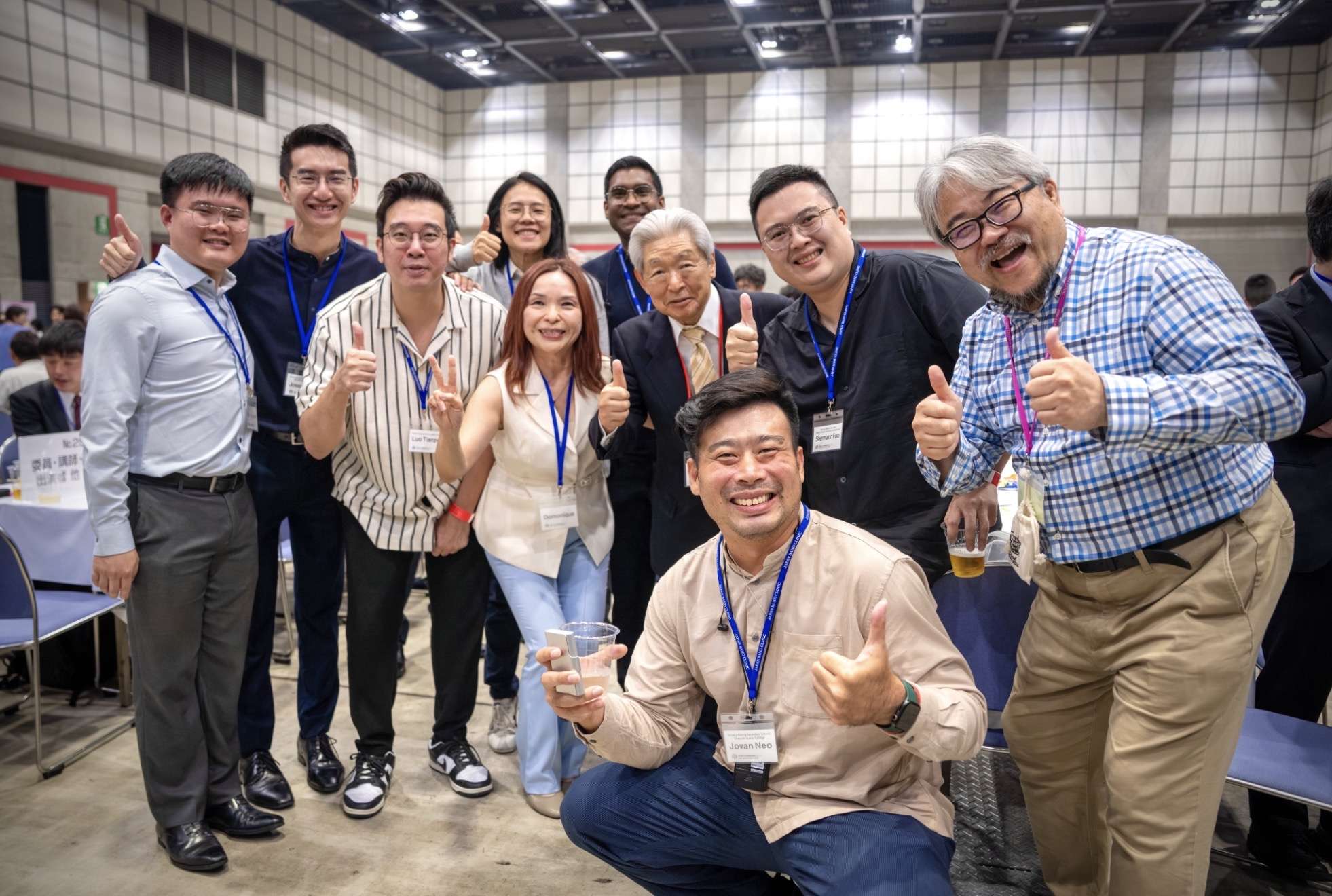
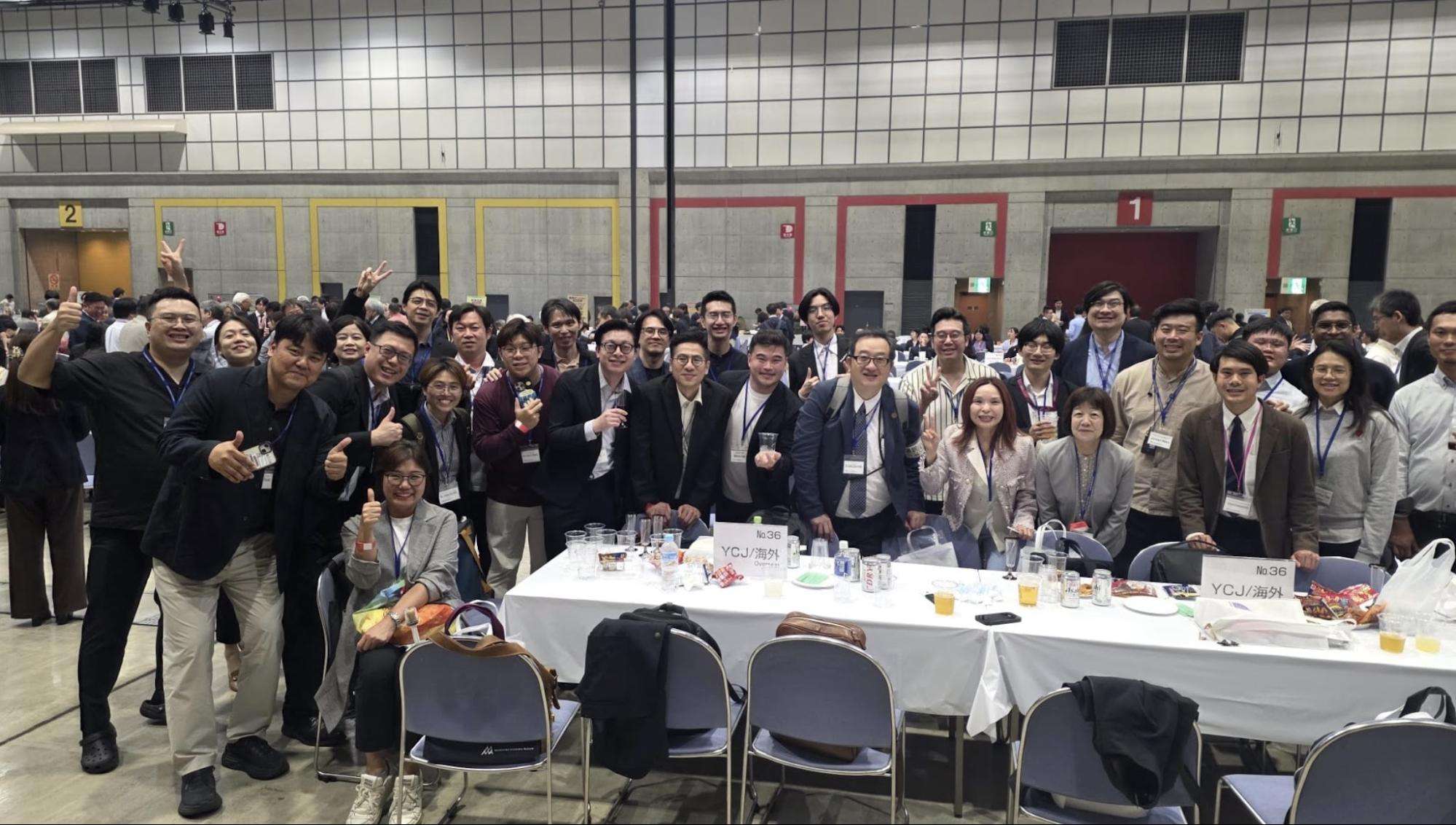
The dinner served as a prime networking forum, allowing the Singaporean delegation to connect and trade insights with hundreds of fellow music educators, conductors, and industry professionals from across Japan and the broader international region.
On the second day, the delegation attended a rehearsal workshop titled “How to Perform Musically,” led by clinician Toshiya Nakamura and featuring the Kagoshima Shoyo High School Wind Band.
The session focused specifically on advanced musical interpretation and expression, framing these concepts around the specific developmental skills and cognitive understanding of Japanese high school students.
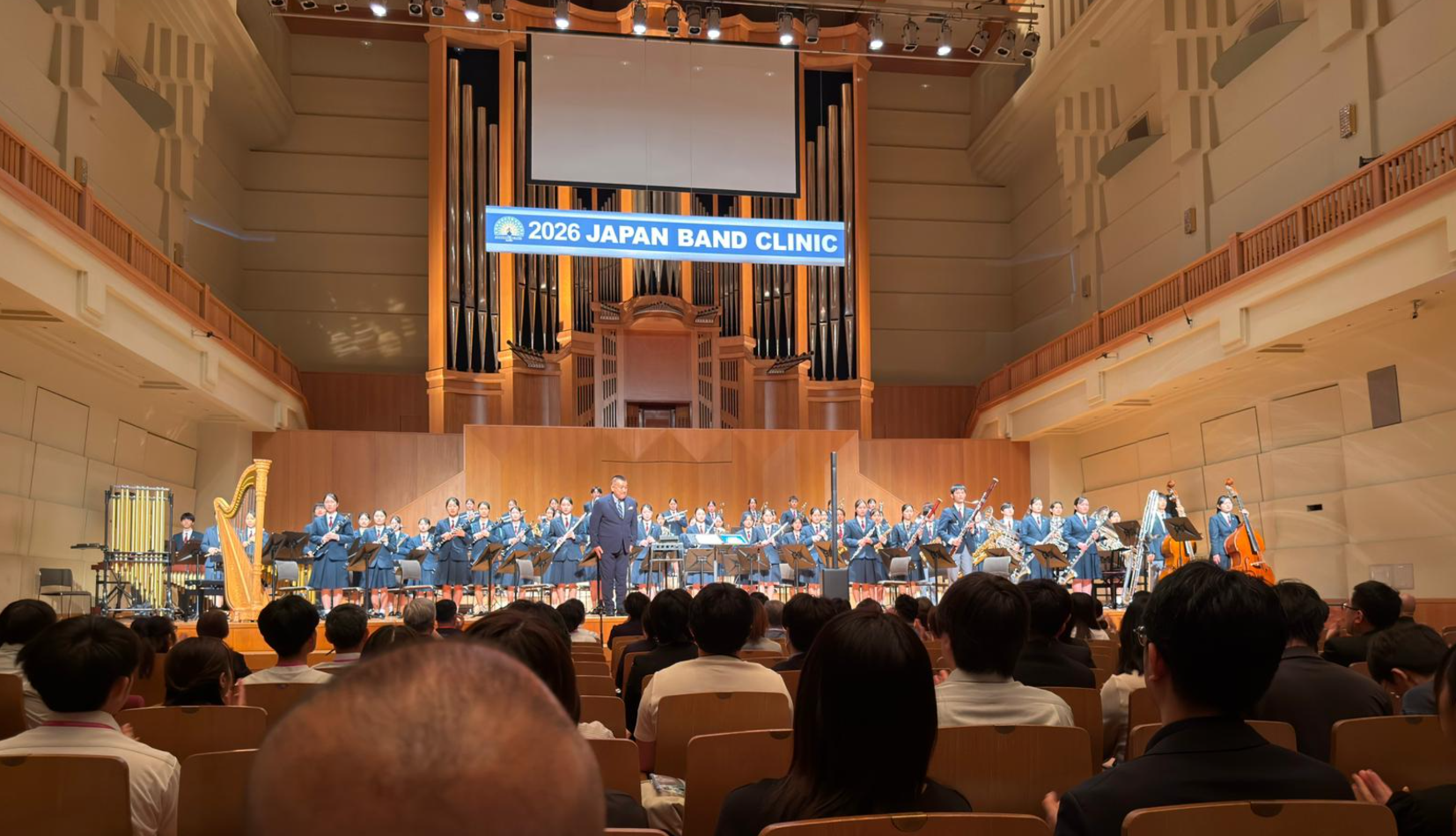
Throughout the session, Mr. Nakamura periodically paused the rehearsal to invite individual ensemble members to introduce themselves and share their personal backgrounds. These introductions revealed that despite the band being based in Kagoshima, its roster comprised student musicians recruited from all across Japan.
This interactive approach offered the visiting directors a rare glimpse into the personal lives and character of Japanese high school students, fostering a deeper empathetic understanding of young musicians. For many in attendance, the most striking revelation was a cultural paradox: despite demonstrating an elite level of musical proficiency, the vast majority of these dedicated students completely stop playing their instruments after graduation.
To conclude the masterclass, several band directors from the audience were invited to step onto the podium to guest-conduct the ensemble, providing them with a rare hands-on opportunity to experience the exceptional responsiveness of a top-tier Japanese school band firsthand.
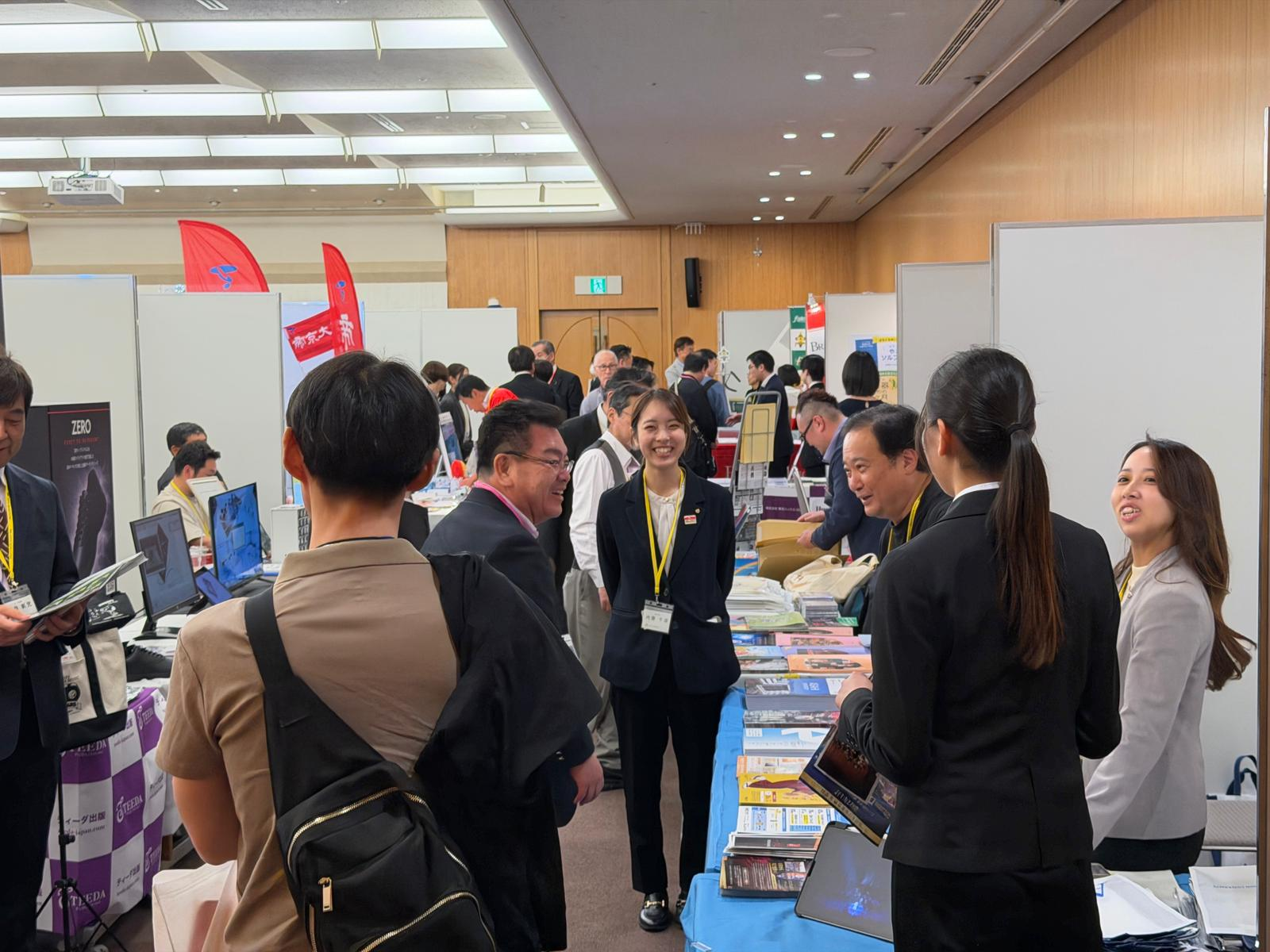
Between scheduled workshops, attendees explored the extensive commercial exhibition zones set up across the Act City complex.
Dedicated manufacturer showrooms allowed band directors to test newly released wind instruments and mouthpieces, while a massive main exhibition hall served as a central hub for wind band resources.
This primary space housed booths from prominent advertising music colleges, professional wind ensembles, and specialized marching uniform manufacturers.
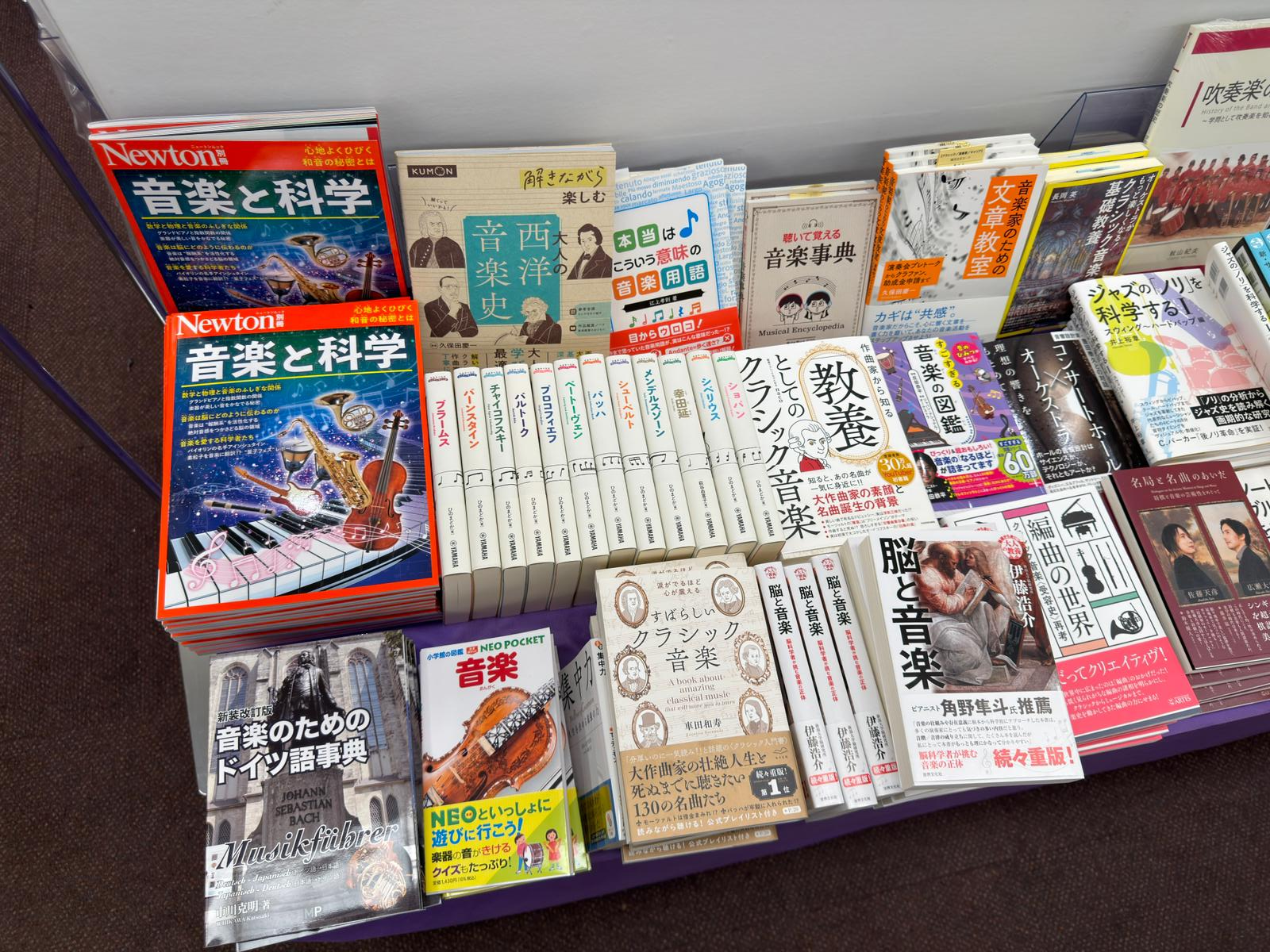
Renowned Japanese music publishers like Brain Music and Foster Music maintained a significant presence, allowing participants to browse extensive scores and purchase sheet music directly from the operators.
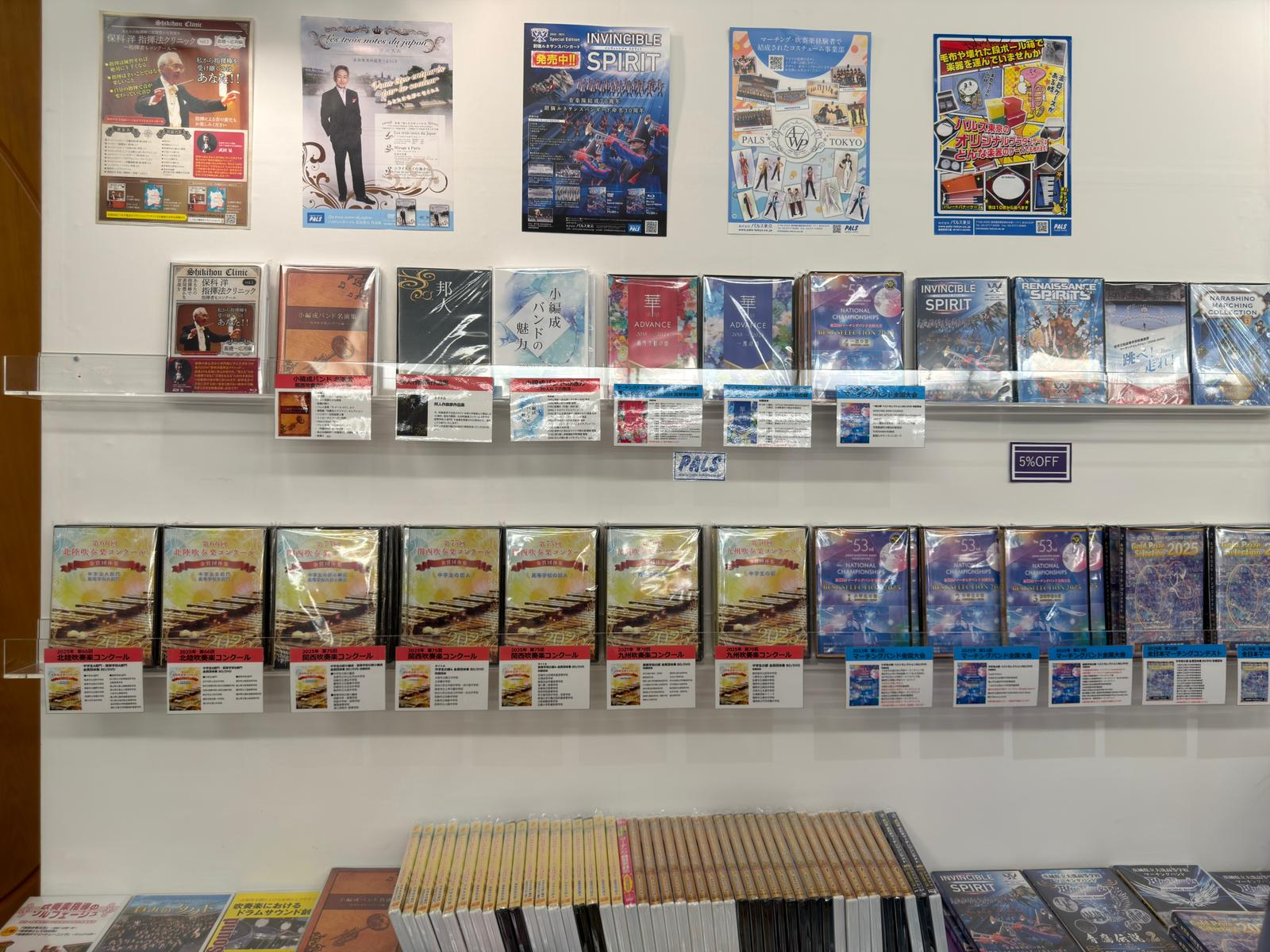
A dedicated section of the hall was configured as a retail shop for clinic attendees, offering curated selections of reference CDs, instructional literature, and conducting batons.
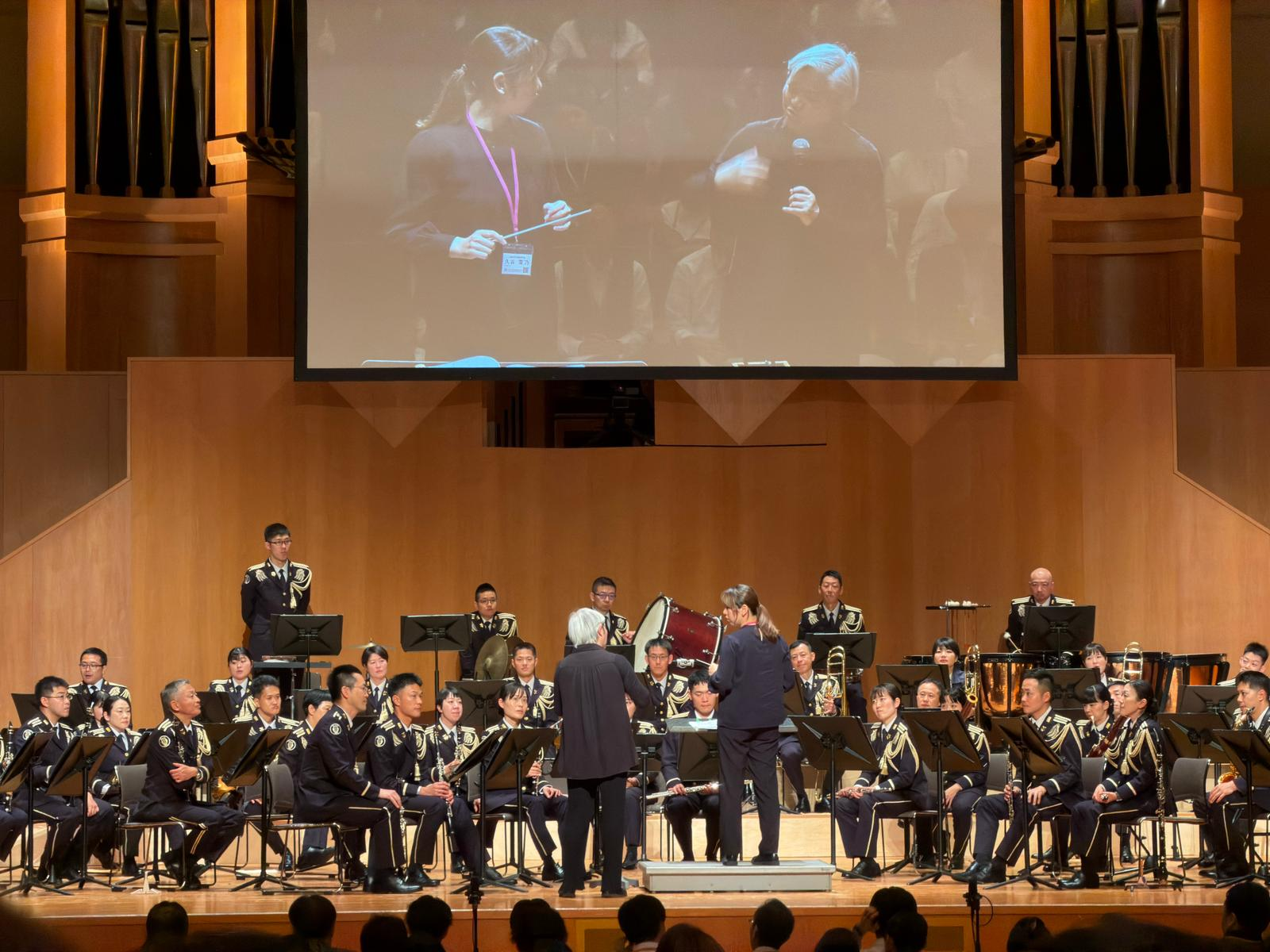
The delegation next attended an advanced conducting masterclass led by renowned Japanese conductor Yuri Nitta, working alongside the Japan Ground Self-Defense Forces (JGSDF) Central Band.
The session offered deep analytical insights into ensemble leadership, bridging the gap between comprehensive score analysis and real-time podium decision-making.
To demonstrate these concepts, Ms. Nitta utilized Alfred Reed’s Armenian Dances (Part 1), a cornerstone of wind literature celebrated for its frequent shifts in stylistic character, meter, and tempo.
Throughout the workshop, the audience remained highly engaged through interactive physical conducting exercises and clear visual demonstrations.
The masterclass culminated with a few selected band directors stepping onto the podium to conduct segments of the piece with the JGSDF Central Band, receiving direct, personalized technical feedback from Ms. Nitta immediately following their podium time.
Prior to the evening concert on the second day, a few delegates made their way to the entrance of Hamamatsu Station, where a public, open-air wind band showcase was underway.
Among the featured performers was the internationally acclaimed Yamaha Symphonic Band.
This performance offered a unique full-circle moment for the visitors, as the musicians on stage were the very same factory technicians and artisans whom the delegation had observed meticulously assembling and polishing instruments at the Yamaha facilities just two days prior.
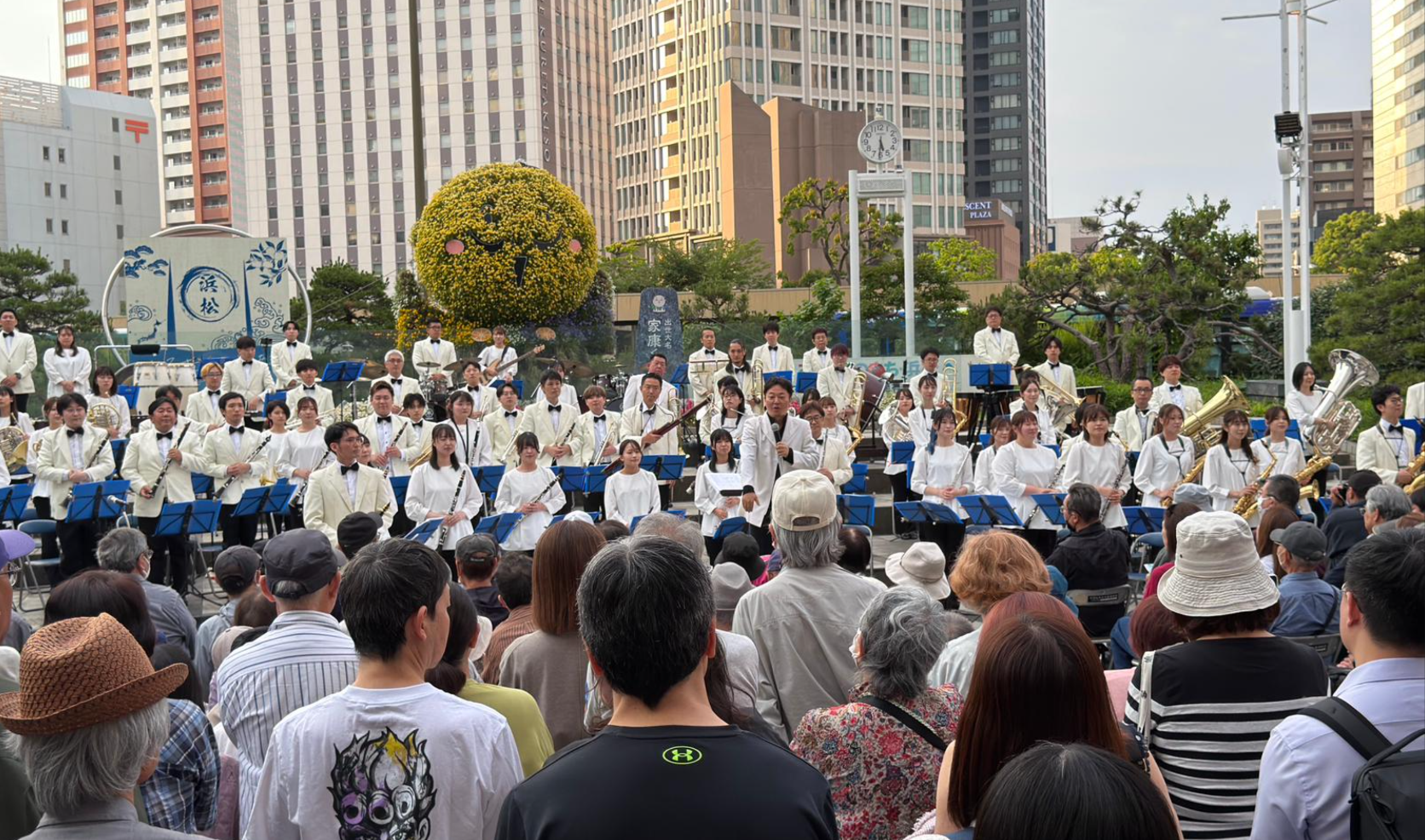
Midway through the outdoor performance, the delegates had to return to Act City to ensure they were seated in time for the evening’s main concert.
The performance proved to be even more vibrant than the opening night, showcasing the Kagoshima Shoyo High School Symphonic Band alongside the nationally renowned Ritsumeikan University Symphonic Band.
Kagoshima Shoyo opened the programme, captivating the audience with their expressive phrasing and pure, clear ensemble blend during a performance of Kei Misawa’s La Mer – Réminiscence de Claude Debussy.
In a distinct stylistic contrast, Ritsumeikan University followed with a powerful performance driven by their celebrated brass section and a distinctly European repertoire selection.
Their demanding setlist included Philip Sparke’s Tuba Concerto, featuring guest soloist Yuta Ikeda, followed by grand rendition of John Williams’ Star Wars: The Phantom Menace suite, and concluded with Thierry Deleruyelle’s Keystone.
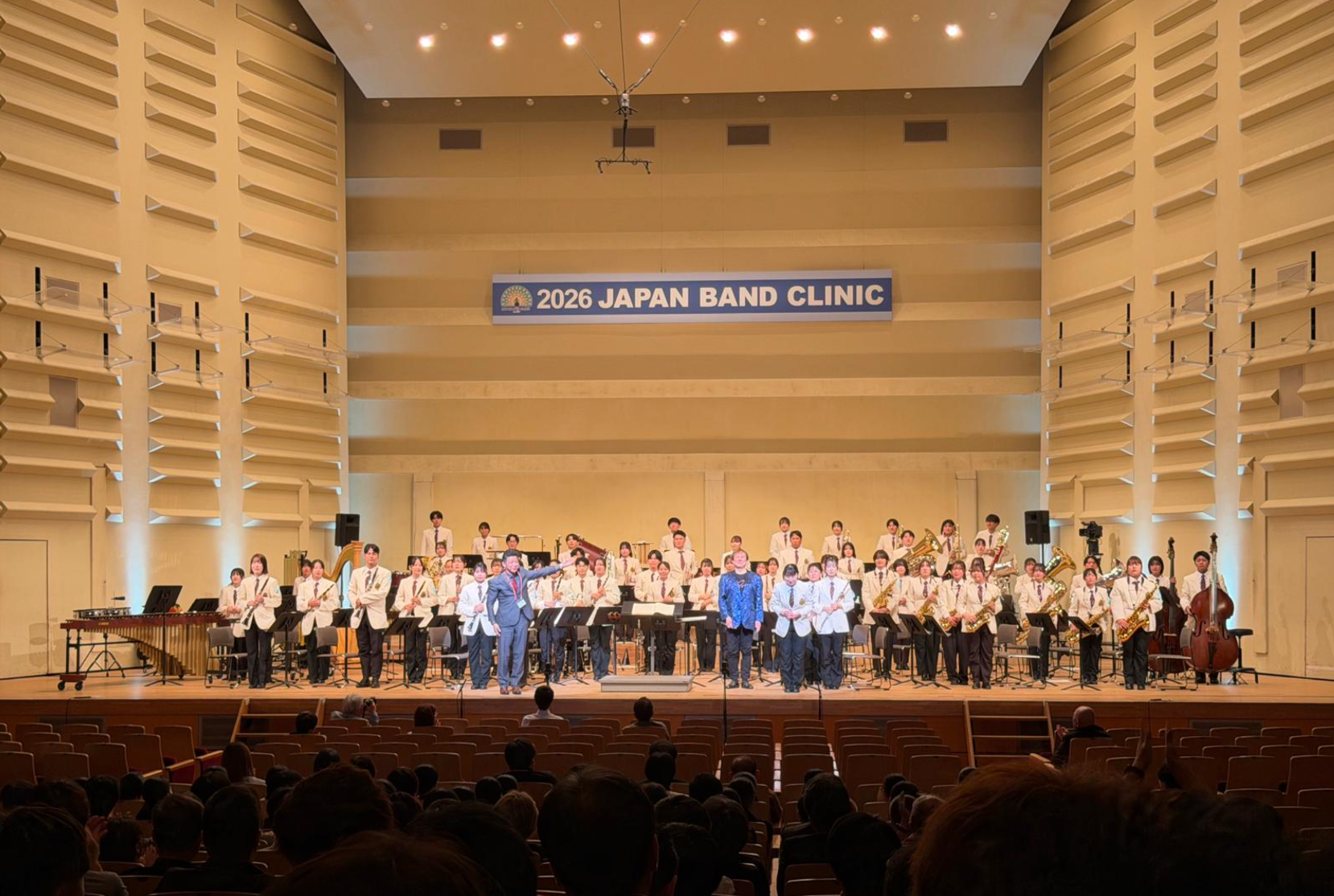
The monumental performances brought the second day of the clinic to a spectacular close, leaving the audience deeply inspired by the contrasting artistic strengths of Japan’s top-tier ensembles.
The third and final day of the clinic commenced with a 90-minute workshop titled “New Repertoire Session,” led by clinicians Yoshio Nakahashi and Toshiyuki Ise alongside the Ritsumeikan University Symphonic Band.
The session focused on the analysis and live performance of 13 relatively new and lesser-known wind band compositions, primarily originating from Europe and the United States, with the long-term goal of integrating these modern works more frequently into the Asian wind music community.
This final reading session set the stage for the highly anticipated grand finale concert, the closing event of the 55th Japan Band Clinic.
The grand finale opened with a performance by the Morioka Municipal Johoku Elementary School Karamatsu Wind Band, illustrating the exceptional technical and musical foundations established at the foundational level of the Japanese band system.
Remarkably, the young musicians performed their entire challenging program completely from memory without music stands, showcasing their rigorous training in internalization and direct communication with the conductor.
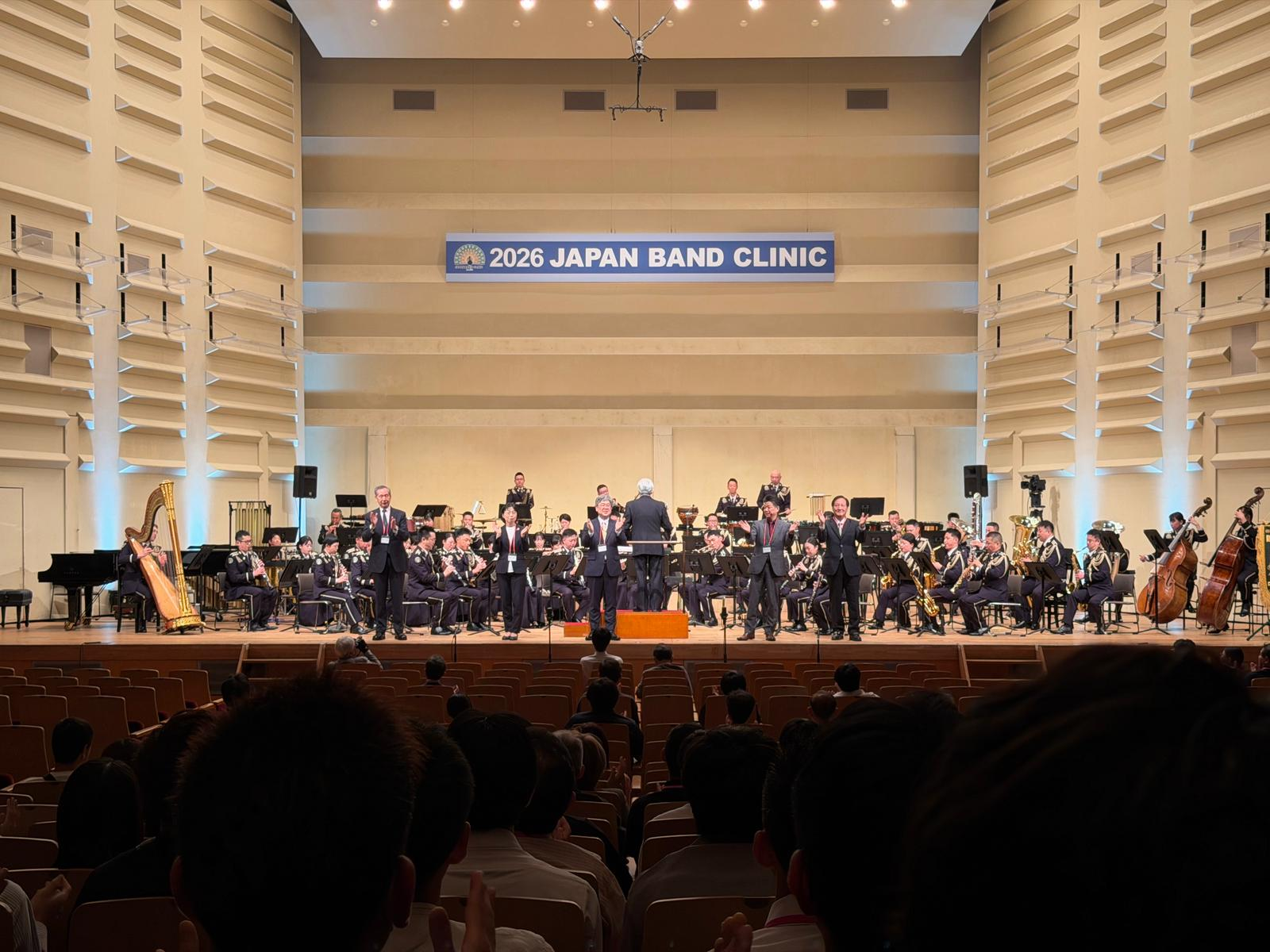
For the festival’s ultimate showcase, the Japan Ground Self-Defense Forces (JGSDF) Central Band returned to the stage to perform for an energized, capacity crowd.
Their demanding program balanced timeless literature like Gustav Holst’s First Suite in E-flat with contemporary masterworks, including John Mackey’s Tsukumogami (Haunted Objects).
The military ensemble also collaborated with saxophone virtuoso Kenta Saito for a brilliant performance of John Williams’ Escapades from the film Catch Me If You Can, before delivering a stunning, powerful rendition of Bert Appermont’s A Brussels Requiem to close the set.
Following an enthusiastic ovation, the JBC Committee joined the musicians on stage to formally conclude the 55th anniversary of the clinic.
With the conclusion of the 55th Japan Band Clinic, the Singapore delegation headed for Tokyo.
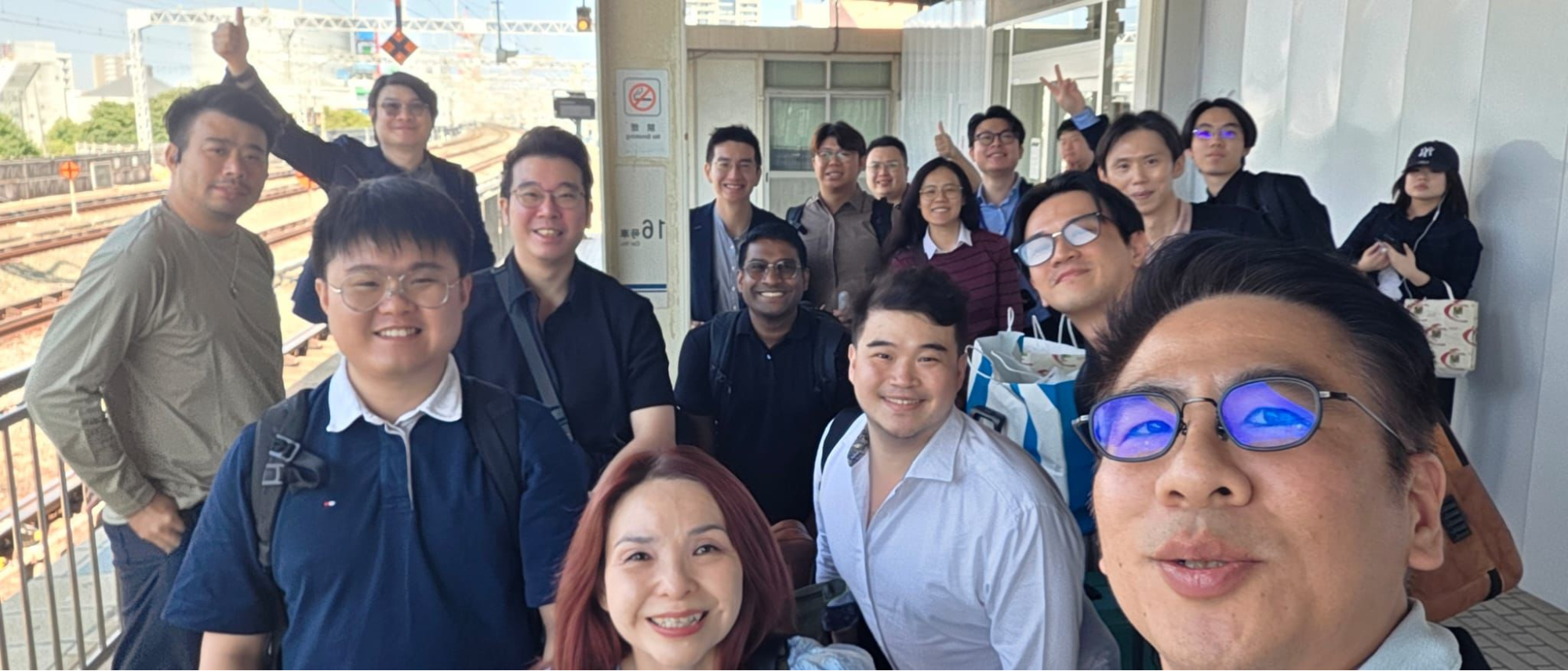
The next day, the band directors were given the rare opportunity to privately tour the Yamaha Music Flagship store and the exclusive Yamaha Atelier in Ginza, Tokyo.
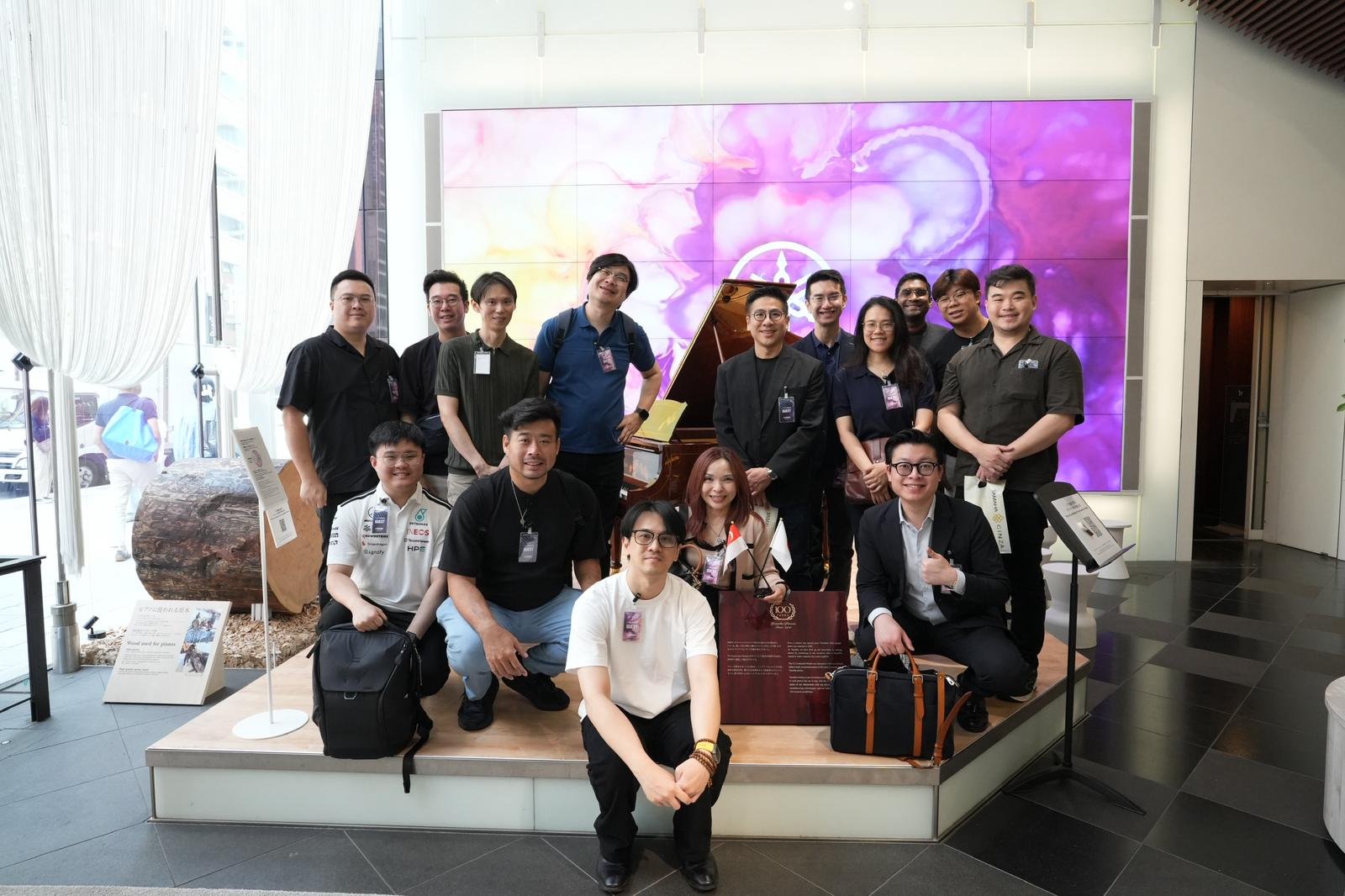
The conclusion of the Japan Band Clinic tour marked the end of an incredibly inspiring educational journey for the attending directors.From the rigorous rehearsal clinics to the breathtaking showcases, the event served as a powerful reminder of what can be achieved when an entire musical ecosystem works toward a shared goal.
Reflecting on their time in Japan, members of the delegation shared their personal takeaways and lasting impressions:
One of the most memorable aspects of JBC is the opportunity to observe rehearsals and clinics led by master educators, where even the smallest details in rehearsal techniques can inspire meaningful changes in our own teaching. Beyond the concerts, the conversations with fellow band directors and musicians from across Asia have had a lasting impact, reminding us that continuous learning, collaboration, and the sharing of ideas are at the heart of building stronger band programmes in Singapore – Pisit Piriyaporn
One experience that left a lasting impact on me was the visit to Hamamatsu Shugakusha High School. I was struck by the focus, discipline and teamwork demonstrated by the high school students, particularly the level of agency given to student leaders to lead rehearsals, provide feedback and guide their section-mates. What stood out was that leadership did not appear to be merely a title or formal appointment. The students took genuine ownership of the rehearsal process, listened closely to one another and worked collectively towards a shared musical goal, while their conductor allowed the space for them to do so. It was a powerful reminder of why we do what we do as music educators, and it inspired us to consider how we might further develop student ownership, peer leadership and a stronger sense of collective responsibility within our own bands in Singapore – Tarun Jayaram
One of the most lasting impressions I took away from the Japan Band Clinic was seeing that Japanese wind bands are supported by a genuine ecosystem rather than isolated individuals or organisations. It was fascinating to see how deeply connected everyone is. From educators and performers to instrument makers, with Yamaha technicians themselves also performing as members of the Yamaha Symphonic Band at the Hamamatsu Station. JBC continues to be a meeting point where these relationships are strengthened, ideas are exchanged, and the entire community grows together. It reminded me that band programmes cannot be built by schools alone, but by an entire system working towards the same goal – Jovan Neo
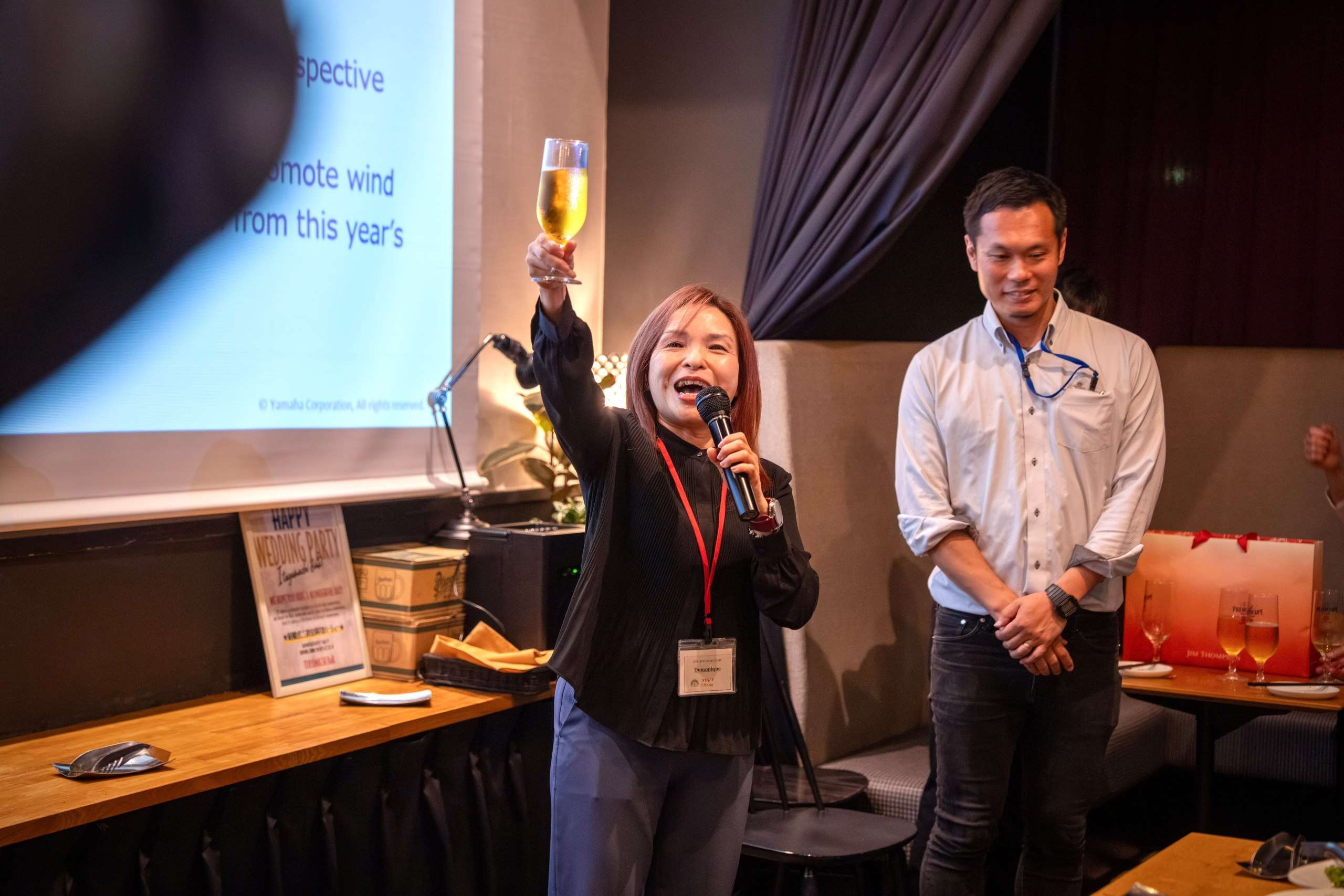
It has been quite some time since Yamaha last brought our local band directors to Japan for the Japan Band Clinic (JBC), so it was really exciting not only for the band directors, but for our team at Yamaha as well! Most of us in Singapore grew up listening to Japanese band recordings, so watching these bands live in concert three days in a row and experiencing the band culture there firsthand was truly eye-opening for everyone, especially for some of us first-timers! Coupled with the extensive range of different classes and workshops across the event, I believe all of us came home learning something; gaining insight into not just band directing, but music-making as a whole. Resuming this annual trip to JBC is part of Yamaha’s initiative to help further develop and contribute to the band scene in Singapore, and we hope to continue providing such opportunities for musicians here! – Isaac Chen, Yamaha Music (Asia)
With hearts full of music and minds sparked with new ideas, the delegation bids farewell to an unforgettable experience.
Until the next Japan Band Clinic!