
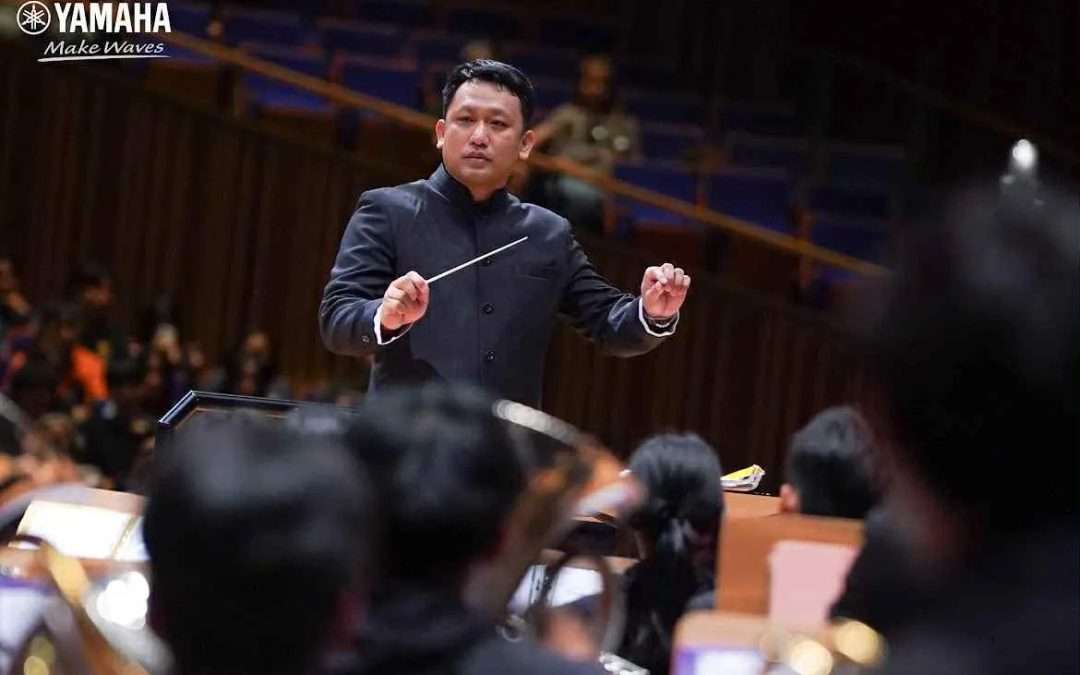
The Ratwinit Bangkaeo Wind Symphony (RWB) has emerged as one of Thailand’s most distinguished school bands, admired for its discipline, artistry, and consistent musical excellence under the leadership of Kaisorn Julatip. Known for their remarkable precision and heartfelt performances, the ensemble recently made its Singapore debut at the Asia and Pacific Band Directors’ Association (APBDA) Conference, where they left a lasting impression on audiences and fellow educators.
At the heart of RWB’s success is Kaisorn’s dual role as both conductor and educator. Through his vision, philosophy, and unwavering commitment to youth development, he has cultivated not just an award-winning wind symphony, but a supportive and empowering environment where young musicians learn, grow, and find purpose through music.
In this exclusive interview with The Band Post, he reflects on his journey, the principles that guide his teaching, and his hopes for the future of band education. This interview was conducted in Thai and translated into English.
What first inspired you to become a band director, and who were your biggest influences in your musical journey?
My interest in pursuing a career as a conductor first took root during my studies at Mahidol University. I was deeply inspired by Maestro Shuichi Komiyama, the esteemed conductor from Montana State University, through his work with the Thailand Philharmonic and the Mahidol Wind Symphony. He played a pivotal role in shaping my approach to conducting, as he was also my instructor and mentor.
Equally influential was Ajarn Thawanchai Suanmonta, who instilled in me the aspiration to become a good music teacher. His guidance has been a powerful driving force, motivating me to continually develop my skills and share my knowledge with sincerity and purpose.
Is there a memorable moment or turning point in your career that shaped the way you teach and lead today?
I shared my vision for elevating the band’s standards with Dr. Sugree Charoensook, who encouraged me to pursue focused studies in conducting so I could gain the depth of knowledge needed to develop an ensemble with true effectiveness. That conversation became the starting point of my journey as a conductor, leading me to study under several esteemed mentors, including Dr. Nipat Kanchanahut, Dr. Vanich Potavanich and Douglas Bostock.
RWB has grown into an award-winning ensemble under your direction. Could you share with us your journey in building the band, and what were some of the biggest challenges you faced along the way?
The Ratwinit Bangkaeo Wind Symphony was originally established as a traditional marching band in 1982. When I assumed the role of conductor in 2005, we began a major transformation by shifting our focus toward the serious development of a Concert Band. We restructured our rehearsal system for greater efficiency and set our sights on consistent competition success. In 2019, this long-term development culminated in the elevation of our program into a full-fledged Music Program.
Our foremost goal is long-term sustainability. To achieve this, we aim to prepare and send students to continue their studies at Thailand’s leading music universities. A core part of our approach is the “Family Model,” where senior students actively teach and guide the younger members, ensuring the constant passing down of knowledge and values.
The greatest challenge lies in maintaining our standard as one of the country’s top ensembles year after year. New members join annually, so it is crucial that we uphold a clear, consistent system of rehearsal, training and knowledge transfer. This ongoing process is what allows the ensemble to grow while preserving its artistic strength and identity.
What kind of culture do you hope to build within your band, both musically and socially?
I hold firmly to the belief that when people are good, the music will naturally follow.
For that reason, our priority is to develop the individual through musical activity, guided by three core pillars:
Behavioural Development
We instill the fundamentals of community living such as punctuality, kindness, mutual support and respect. These behaviours form the foundation for healthy collaboration and, ultimately, meaningful music-making.
Spiritual and Emotional Development (Mindset)
The mind governs behaviour, so it must be nurtured alongside technical growth. We focus on emotional regulation, patience, forgiveness, positive thinking and unity, encouraging students to consider the greater good. When the inner character is strong, outward behaviour becomes beautifully aligned.
Intellectual Development
Music-making must be supported by knowledge. Students learn how to listen deeply, absorb emotion, study composers and understand historical and theoretical contexts in order to interpret music more truthfully. This intellectual growth elevates artistic performance.
For more than 20 years, I have built this band from a position of no inherent advantage. The success we celebrate today is the result of applying this philosophy with seriousness, persistence and consistency. It is this foundation that has brought the Ratwinit Bangkaeo Wind Symphony to the proud standing it holds today.
As an educator, what are the principles and values that guide you in working with young musicians?
My guiding principle is to cultivate a found family environment, where we support one another in every aspect of life, not by blood but by choice. This sense of care extends beyond rehearsals into daily habits, academics, musical growth and social interaction.
How do you balance the pursuit of musical excellence with the character development of your students?
My goal is to develop each student into a good and responsible member of society, rooted in the belief that when people grow in character, the music will naturally follow. In practice, this means teaching civic-mindedness and encouraging them to think beyond themselves for the greater good. A student who values others will not be late, because they know it keeps the whole group waiting. They will not act carelessly, because they understand it creates difficulty for their friends.
This mindset directly influences their musical performance. When they care about the team, they practice with discipline, take ownership of their part and refuse to be a burden to the ensemble. Their responsibility becomes the foundation of our collective sound.
Many young musicians struggle with discipline and motivation. How do you keep your students inspired to practice and stay committed?
I build discipline and drive by setting clear and ambitious goals. We aim to be number one, to be the best. While this may sound intense, a shared goal of championship or nothing naturally creates a culture of focus and determination. Training becomes purposeful, preparation becomes serious, and every member understands what is required of them.
When the students finally achieve victory, the lesson becomes deeper than the trophy itself. They recognise the level of commitment needed to reach excellence, and they understand that success is never the work of one person. It happens only through shared effort, trust and genuine dependence on one another.
Many of our readers are student musicians and leaders. What advice would you give to band students on how they can contribute to the success of their ensemble?
Teamwork is the core of everything we do. When we step on stage, we perform as one unit, moving forward together and leaving no one behind. If a friend struggles with their part, our role is not to judge or criticise, but to lift them up and help them succeed. When we grow together in this way, there is no limit to how far the band can progress.
For student leaders, what are some key qualities or practices you believe are essential to lead their peers effectively?
Effective student leaders must embody qualities that uplift their peers and strengthen the ensemble as a whole:
Focus on Shared Responsibility
A leader uses their strengths to support and guide others. Helping teammates grow is not optional. It is essential to the success of the band.
Promote Respectful Communication
Create space for constructive discussion, addressing issues with clarity and care. The focus should always be on improving the work, not criticising the person.
Prioritise the Team Over the Individual
Place the success of the ensemble above personal recognition. When the band thrives, everyone benefits.
Practise Active Listening
Listen with sincerity. This helps high-performing members remain open to new perspectives and empowers quieter voices to be heard.
How do you encourage teamwork among students, especially when balancing strong individual talents with the needs of the ensemble?
I create this balance by setting shared goals that are truly interdependent. These goals are intentionally ambitious, so great that no individual could possibly achieve them alone. Every member must hold a vital and clearly defined role, each contribution woven into the success of the whole.
When goals are designed this way, even the most talented students come to understand that excellence is not an individual accomplishment. True achievement emerges only when every person contributes, supports one another and moves forward as one united team.
Looking ahead, what are your aspirations for RWB? We also understand that you are involved with the Black Orange Wind Symphony, which is believed to be an alumni group. Could you share more about its mission and how it connects with RWB?
We are committed to supporting the Black Orange Wind Symphony, an ensemble founded entirely by Ratwinit Bangkaeo alumni. Our mission is to reunite and perform together each year, creating opportunities, offering inspiration and passing on experience to the next generation of the Ratwinit Bangkaeo Wind Symphony.
From your experience, how do you see the band scene in Thailand developing, and how does it compare with other countries in Asia?
I have observed that Thailand’s music scene is developing rapidly, supported by a growing number of knowledgeable and talented individuals. Many have advanced to become professional musicians in world-class ensembles, and music education at the university level has become far more rigorous and sophisticated than in the past.
What role do you think international exchanges and festivals play in the growth of young musicians?
International exchanges and festivals play an incredibly important role. Students meet new people, form friendships, gain inspiration and experience new musical perspectives. Most importantly, these events broaden their musical network and give them an experience that encourages continuous self-improvement, so they can return stronger and receive such meaningful opportunities again.
Ratwinit Bangkaeo Wind Symphony recently made its debut in Singapore at the Asia and Pacific Band Directors’ Association Conference. What was your experience like performing at this international platform?
The Ratwinit Bangkaeo Wind Symphony’s debut performance in Singapore at the APBDA Conference was an experience of great pride and joy. We are deeply grateful for the applause and encouragement we received, as it meant more to us than words can express. I am confident that every student returned with invaluable musical growth and memories from this event.
If you could leave one lasting lesson for your students, something they will carry with them long after they leave the band, what would it be?
If there is one lesson I hope my students will carry with them throughout their lives, it is this ‘How much you know will never matter as much as what you accomplish’.
In a world where many speak with confidence, few take real action. Do not fall into the comfort of knowing much but doing little. Do not take pride in having only tried when you have not succeeded.
Words can shape how others see you, but only actions build trust and credibility.
Those who are truly capable rarely need to boast, because their work speaks louder than they do. Knowledge alone cannot surpass skill, and effort without results will never exceed success. The one who simply knows may fall behind the one who can do, and the one who merely tries may be surpassed by the one who finishes.
The real champions in the arena of life are those who move with purpose, work quietly and complete what they set out to do. Let your actions speak for you. Let your achievements say what words cannot.
What do you hope Ratwinit Bangkaeo Wind Symphony will be remembered for in the future?
I hope that in the future, the Ratwinit Bangkaeo Wind Symphony will be remembered for who we truly are. Our music reflects our heart, our dedication, our sacrifice and our unity, and it stands as the voice of the Ratwinit Bangkaeo community. My hope is that our sound will one day be recognised instantly, defined by authenticity and spirit, and remembered as unmistakably ours.
Closing Remarks by the Editor
Through his devotion to teaching and his steadfast belief in the transformative power of music, Kaisorn Julatip has shaped the Ratwinit Bangkaeo Wind Symphony into a beacon of excellence and character. With dedication, vision and an unwavering commitment to music education, he has elevated the ensemble into a model of inspiration for young musicians across the region. His philosophy, grounded in discipline, compassion, shared responsibility and the holistic development of students, reflects how a band can grow beyond the definition of an ensemble. Under his influence, it becomes a family, a community and a lifelong source of inspiration.
As the Ratwinit Bangkaeo Wind Symphony progresses together with the alumni-driven Black Orange Wind Symphony, his leadership continues to demonstrate that excellence in band music is built not only on technical mastery but on values, mentorship and unity. His contribution stands as a testament to the power of music education to forge futures, strengthen communities and shape generations. It reinforces the belief that behind every outstanding performance is a foundation of strong leadership, teamwork and conviction in what music can achieve.
The interview was originally conducted in Thai, through Miss Kanyaphorn Wirulphojit (Naem).
บทสัมภาษณ์กับคุณไกรสร จุฬาทิพย์: ผู้อำนวยการดนตรี วงโยธวาทิต Ratwinit Bangkaeo Wind Symphony
บทนำ
วงโยธวาทิต Ratwinit Bangkaeo Wind Symphony (RWB) เป็นหนึ่งในวงโยธวาทิตประเภทนั่งบรนเลงที่โดดเด่นที่สุดในประเทศไทย เป็นที่รู้จักในด้านวินัย ศิลปะ และความสำเร็จทางดนตรีภายใต้การนำของคุณไกรสร จุฬาทิพย์
วงดนตรีที่ได้รับรางวัลนี้เพิ่งเปิดตัวที่ประเทศสิงคโปร์ในงานประชุมสมาคมผู้อำนวยการวงดนตรีแห่งเอเชียและแปซิฟิก (APBDA) โดยได้สร้างความประทับใจอย่างมากให้กับผู้ชมและบรรดาผู้อำนวยการวงดนตรีด้วยกัน
ในฐานะทั้งครูผู้สอนและวาทยกร คุณไกรสรได้มีบทบาทสำคัญในการกำหนดอัตลักษณ์ของวง RWB ไม่เพียงแต่สร้างวงซิมโฟนีเครื่องเป่าที่มีประสิทธิภาพสูงเท่านั้น แต่ยังเป็นสภาพแวดล้อมที่ส่งเสริมให้นักดนตรีรุ่นเยาว์ได้เติบโต ในบทสัมภาษณ์พิเศษกับ The Band Post นี้ เขาได้แบ่งปันเส้นทาง ค่านิยม และวิสัยทัศน์สำหรับอนาคตของการศึกษาด้านวงดนตรี
เส้นทางส่วนตัวและแรงบันดาลใจ
แรงบันดาลใจแรกสู่การเป็นวาทยกร และผู้มีอิทธิพลในเส้นทางดนตรี
ประกายแรกที่จุดความสนใจในอาชีพวาทยกรเกิดขึ้นในรั้วมหาวิทยาลัยมหิดล โดยได้รับแรงบันดาลใจจาก อาจารย์ Shuichi Komiyama วาทยากรผู้เปี่ยมด้วยความสามารถจาก Montana State University และวง Thailand Philharmonic รวมถึง Mahidol Wind Symphony ซึ่งเป็นอาจารย์ผู้ประสาทวิชาการนำวง
และอีกท่านหนึ่งที่ได้มอบแรงปรารถนาอันยิ่งใหญ่ในการเป็น “ครูดนตรีที่ดี” คือ อาจารย์ถวัลย์ชัย สวนมณฑา ซึ่งเป็นพลังขับเคลื่อนให้ผมมุ่งมั่นที่จะพัฒนาและถ่ายทอดองค์ความรู้ด้วยหัวใจ
ช่วงเวลาสำคัญที่หล่อหลอมวิธีการนำวงและการสอน
จุดเปลี่ยนที่สำคัญยิ่งในชีวิตการทำงานของผมย้อนกลับไปในช่วงมัธยมศึกษาที่โรงเรียนราชวินิตบางแก้ว เมื่อผมเป็นสมาชิกของวง Marching Band ในยุคที่ระบบการเรียนการสอนยังขาดประสิทธิภาพ สิ่งนี้เองที่กลายเป็น แรงปรารถนาอันแรงกล้า ให้ผมตั้งใจศึกษาด้านดนตรีอย่างจริงจัง เพื่อกลับมาวางรากฐานและพัฒนาวงดนตรีของโรงเรียนให้ก้าวหน้ายิ่งขึ้น
ผมได้ปรึกษาและพูดคุยกับ ดร.สุกรี เจริญสุข เกี่ยวกับวิสัยทัศน์ในการยกระดับวงดนตรี ดร.สุกรี ได้แนะนำให้ผมศึกษาด้านวาทยกร เพื่อให้มีความรู้ความสามารถอย่างแท้จริงในการพัฒนาวง นับเป็นจุดเริ่มต้นของเส้นทางวาทยกรที่ผมได้เรียนรู้จากครูบาอาจารย์หลายท่าน เช่น ดร.นิพัต กาญจนะหุต, อาจารย์วาณิช โปตะวาณิช, และ Douglas Bostock
การสร้างวงดนตรี: จากรากฐานสู่ความยั่งยืน
เส้นทางการสร้างวงโยธวาทิตโรงเรียนราชวินิตบางแก้วสู่ความสำเร็จ
วงโยธวาทิตโรงเรียนราชวินิตบางแก้วก่อตั้งขึ้นในรูปแบบ Marching Band ตั้งแต่ปี พ.ศ. 2525 และเมื่อผมเริ่มเข้ามารับหน้าที่ในปี พ.ศ. 2548 ก็ได้เริ่มต้นการเปลี่ยนแปลงครั้งสำคัญ โดยปรับเปลี่ยนเป็นรูปแบบ Concert Band อย่างจริงจัง มีการปรับระบบการฝึกซ้อมให้มีประสิทธิภาพยิ่งขึ้น มุ่งสู่การแข่งขันอย่างต่อเนื่อง จนกระทั่งในปี พ.ศ. 2562 เราได้ยกระดับเป็น Music Program อย่างเต็มตัว
เป้าหมายสูงสุดของเราคือการสร้าง ความยั่งยืน ให้กับวง ด้วยการส่งนักเรียนเข้าศึกษาต่อในมหาวิทยาลัยชั้นนำด้านดนตรีของประเทศ และใช้หลักการ “ครอบครัว (Family Model) พี่สอนน้อง” ในการขับเคลื่อน ความท้าทายที่ใหญ่ที่สุดคือการ รักษามาตรฐาน ในระดับแนวหน้าของประเทศอย่างสม่ำเสมอ เนื่องจากวงมีการเปลี่ยนสมาชิกใหม่ในทุกปี จึงจำเป็นต้องมีการจัดวาง ระบบการฝึกซ้อมและการถ่ายทอดความรู้ ที่แข็งแกร่งและต่อเนื่อง
วัฒนธรรมที่ปรารถนาจะสร้างในวงดนตรี
ผมยึดมั่นในปรัชญาที่ว่า “เมื่อทุกคนเป็นคนดี เสียงดนตรีก็จะดีตาม” เราจึงมุ่งเน้นการพัฒนาคนผ่านกิจกรรมดนตรี โดยแบ่งเป็น 3 เสาหลัก คือ:
- พัฒนาพฤติกรรม: ปลูกฝังพื้นฐานการอยู่ร่วมกัน เช่น การตรงต่อเวลา การมีน้ำใจ การช่วยเหลือเกื้อกูล และการให้ความเคารพซึ่งกันและกัน ซึ่งเป็นพฤติกรรมพื้นฐานที่ส่งเสริมการสร้างสรรค์ดนตรีที่ดี
- พัฒนาจิตใจ: จิตใจเป็นตัวกำหนดพฤติกรรม ดังนั้นจึงต้องได้รับการพัฒนาควบคู่กันไป เช่น การระงับอารมณ์ ความอดทน การให้อภัย การมองโลกในแง่บวก และการนึกถึงส่วนรวม ความเป็นน้ำหนึ่งใจเดียวกัน เหล่านี้จะส่งผลให้พฤติกรรมภายนอกแสดงออกอย่างงดงาม
- พัฒนาปัญญา: องค์ประกอบสำคัญของการสร้างดนตรีคือการเรียนรู้ การรู้จักฟังดนตรีที่ดีเพื่อซึมซับอารมณ์เพลง การศึกษาเรื่องราวของผู้ประพันธ์เพื่อตีความบทเพลงให้ใกล้เคียงกับสิ่งที่ต้องการสื่อสาร รวมถึงการศึกษาทฤษฎีและประวัติศาสตร์ดนตรีเพิ่มเติม จะช่วยยกระดับการเล่นดนตรีให้สูงขึ้นตามไปด้วย
กว่า 20 ปีของการพัฒนาวงโดยเริ่มต้นแบบ “ไม่มีแต้มต่อใด ๆ” ความสำเร็จในวันนี้เกิดจากการผสมผสานปรัชญาเหล่านี้เข้ากับความจริงจังและสม่ำเสมอ จนทำให้วงโยธวาทิตโรงเรียนราชวินิตบางแก้วมาอยู่ ณ จุดที่ภาคภูมิใจในปัจจุบันได้
หลักการและค่านิยมในการศึกษา
หลักการและค่านิยมในการทำงานกับนักดนตรีรุ่นเยาว์
หลักการสำคัญที่นำทางผมคือการสร้างความสัมพันธ์แบบ “พี่น้องและครอบครัว” ที่ดูแลกันในทุกมิติของชีวิต ไม่ว่าจะเป็นการใช้ชีวิตประจำวัน การเรียน การเล่นดนตรี และการอยู่ร่วมกันในสังคม
การสร้างสมดุลระหว่างความเป็นเลิศทางดนตรีกับการพัฒนาคุณลักษณะนิสัย
เราพัฒนาทุกคนให้เป็นคนดีในสังคม ด้วยความเชื่อที่ว่า “เมื่อทุกคนเป็นคนดี เสียงดนตรีก็จะดีตาม” ในทางปฏิบัติคือการสอนให้พวกเขามี จิตสำนึกสาธารณะ และนึกถึงส่วนรวม เด็ก ๆ จะไม่ต้องการมาสายเพราะจะทำให้เพื่อนต้องรอคอย หรือจะไม่ทำสิ่งใดที่ทำให้ผู้อื่นเดือดร้อน ซึ่งส่งผลโดยตรงต่อการเล่นดนตรี เพราะพวกเขาจะฝึกซ้อมและรับผิดชอบโน้ตเพลงของตนเองให้ดีที่สุด เพื่อไม่ให้เป็นภาระหรือทำให้การรวมวงต้องหยุดชะงัก
การสร้างแรงบันดาลใจและระเบียบวินัย
ผมกระตุ้นแรงจูงใจและระเบียบวินัยด้วยการ ตั้งเป้าหมายเพื่อชัยชนะ เสมอ เราตั้งเป้าหมายที่ชัดเจนว่าต้องเป็นที่หนึ่ง ต้องดีที่สุด แม้ฟังดูเข้มงวด แต่เมื่อทุกคนมีเป้าหมายร่วมกันว่าคือ “ชนะเลิศเท่านั้น” กระบวนการฝึกซ้อมและการเตรียมตัวจึงต้องเข้มข้นและทุ่มเทอย่างเต็มที่ เมื่อพวกเขาคว้าชัยชนะมาได้จริง ๆ พวกเขาจะได้เรียนรู้ประสบการณ์อันล้ำค่าว่า การจะประสบความสำเร็จนั้นต้องทุ่มเทขนาดไหน และตระหนักว่าความสำเร็จที่ยิ่งใหญ่นี้ ไม่สามารถเกิดขึ้นได้ด้วยใครคนใดคนหนึ่งเพียงคนเดียว แต่ต้องอาศัยการพึ่งพาซึ่งกันและกันอย่างแท้จริง
คำแนะนำสำหรับนักเรียนและผู้นำ
คำแนะนำสำหรับนักเรียนวงดนตรีเพื่อความสำเร็จของวง
ความเป็นทีมเวิร์ก (Teamwork) คือหัวใจสำคัญที่สุด เมื่ออยู่บนเวทีในฐานะวงดนตรี ทุกคนคือหนึ่งเดียวกัน ต้อง “ไปด้วยกัน ไม่ทิ้งใครไว้ข้างหลัง” หากมีเพื่อนคนใดคนหนึ่งยังเล่นไม่ได้ หน้าที่ของเราไม่ใช่การดูถูกหรือตำหนิ แต่คือการยื่นมือเข้าไปช่วยเหลือให้เขาเล่นได้ เมื่อวงสามารถพัฒนาและเดินไปด้วยกันได้แบบนี้ วงก็จะก้าวหน้าอย่างไม่มีที่สิ้นสุด
คุณสมบัติที่สำคัญสำหรับผู้นำนักเรียน
ผู้นำนักเรียนที่ทรงประสิทธิภาพต้องมีคุณสมบัติและแนวทางปฏิบัติที่มุ่งเน้นการยกระดับเพื่อนร่วมวงและวงดนตรีโดยรวม:
- เน้นความรับผิดชอบในการแบ่งปัน: ผู้นำต้องเห็นว่าหน้าที่ของตนคือการใช้ความสามารถที่โดดเด่นมา ยกระดับและเป็นโค้ช ให้กับเพื่อนร่วมทีม การช่วยเหลือผู้อื่นคือส่วนหนึ่งของความสำเร็จของทีม
- ส่งเสริมการสื่อสารอย่างให้เกียรติ: จัดให้มีพื้นที่สำหรับการพูดคุยอย่างสร้างสรรค์เกี่ยวกับปัญหาหรือจุดที่ต้องปรับปรุง โดยมุ่งเน้นไปที่ งาน ไม่ใช่การตำหนิ ตัวบุคคล
- เน้นผลลัพธ์ของทีม: ให้ความสำคัญสูงสุดกับผลงานของวงโดยรวม เพื่อตอกย้ำว่า ความต้องการของวง คือสิ่งที่สำคัญที่สุด
- การฟังอย่างตั้งใจ: การรับฟังความคิดเห็นจากเพื่อนร่วมวงอย่างแท้จริง ช่วยให้สมาชิกที่มีความสามารถสูงเปิดรับมุมมองใหม่ ๆ และทำให้สมาชิกที่เงียบกว่ากล้าที่จะแสดงความคิดเห็น
การสร้างสมดุลระหว่างความสามารถส่วนบุคคลและความต้องการของวง
สร้างสมดุลนี้ผ่านการ สร้างเป้าหมายร่วมที่ต้องพึ่งพากัน เป้าหมายที่กำหนดจะต้องยิ่งใหญ่จนไม่มีใครคนเดียวจะทำสำเร็จได้ และส่วนงานของแต่ละคนต้องมีความสำคัญและเชื่อมโยงกันอย่างชัดเจน การทำเช่นนี้ทำให้นักเรียนที่มีความสามารถโดดเด่นเข้าใจว่า ความสำเร็จของทีมเกิดขึ้นได้ก็ต่อเมื่อผลงานของทุกคนถูกนำมาร้อยเรียงเข้าด้วยกัน
ความมุ่งมั่นและศิษย์เก่า
ความมุ่งมั่นสำหรับวงโยธวาทิตโรงเรียนราชวินิตบางแก้วในอนาคต
เรามีความมุ่งมั่นในการสนับสนุนวง Black Orange Wind Symphony (BO) ซึ่งก่อตั้งโดยศิษย์เก่าราชวินิตบางแก้วเท่านั้น พันธกิจของ BO คือการรวมตัวเล่นดนตรีร่วมกันในทุก ๆ ปี เพื่อสร้างโอกาสและมอบ แรงบันดาลใจ รวมถึงถ่ายทอดประสบการณ์ให้กับรุ่นน้องในวงปัจจุบัน
มุมมองในระดับภูมิภาคและนานาชาติ
การพัฒนาของแวดวงวงดนตรีในประเทศไทย
ผมมองเห็นว่าวงการดนตรีในประเทศไทย พัฒนาไปอย่างรวดเร็ว เนื่องจากมีผู้ที่มีความรู้ความสามารถมากขึ้น หลายคนได้ไปเป็นนักดนตรีประจำในวงระดับโลก และระบบการเรียนการสอนดนตรีในระดับอุดมศึกษาของไทยก็มีการพัฒนาและมีความเข้มข้นมากขึ้นกว่าเดิมมาก
บทบาทของการแลกเปลี่ยนและเทศกาลนานาชาติ
การแลกเปลี่ยนและเทศกาลนานาชาติมีบทบาทสำคัญอย่างยิ่ง เด็ก ๆ ได้พบปะผู้คน ได้เพื่อน ได้รับแรงบันดาลใจ และได้ มุมมองทางด้านดนตรีใหม่ ๆ ที่สำคัญที่สุดคือการขยาย เครือข่ายทางดนตรี ซึ่งเป็นประสบการณ์ที่กระตุ้นให้พวกเขามีความมุ่งมั่นที่จะพัฒนาตนเองให้เก่งขึ้น เพื่อที่จะได้กลับไปรับประสบการณ์ที่ดีเช่นนี้อีก
ประสบการณ์ที่ APBDA 2025
การแสดงบนเวทีนานาชาติ Asia and Pacific Band Directors’ Association (APBDA) 2025
การเปิดตัวของวงโยธวาทิตโรงเรียนราชวินิตบางแก้ว ณ ประเทศสิงคโปร์ในงาน APBDA เป็นประสบการณ์ที่ ยอดเยี่ยมและน่าภาคภูมิใจ อย่างยิ่ง พวกเราขอขอบคุณสำหรับเสียงปรบมือและกำลังใจจากทุกท่าน ซึ่งมีค่าอย่างยิ่ง และผมเชื่อมั่นว่าเด็ก ๆ ทุกคนได้รับประสบการณ์ทางดนตรีที่ดีที่สุดจากงาน APBDA ครั้งนี้
วิสัยทัศน์และมรดก
บทเรียนสุดท้ายที่นักเรียนจะจดจำและนำติดตัวไป
หากมีบทเรียนสุดท้ายที่ผมอยากจะฝากไว้ให้ลูกศิษย์นำติดตัวไปตลอดชีวิต นั่นคือ…
”เก่งแค่ไหน…ไม่สำคัญเท่าทำได้แค่ไหน”
ในโลกที่ใคร ๆ ก็สามารถพูดได้ทุกอย่าง แต่ไม่ใช่ทุกคนที่จะลงมือทำจริง อย่าหลงอยู่กับการรู้เยอะแต่ไม่เคยลงมือ อย่าภูมิใจว่า “เคยทำ” แต่ไม่เคย “สำเร็จ”
“Words” may create an image, but only “actions” build trust. Truly skilled people don’t need to talk much because their work will speak for itself. Remember… even those who know a lot can lose to those who are skilled, and those who do a lot can’t compete with those who succeed. Those who quietly succeed according to their plans are the real winners in the arena of life.
Asyahari Hussaini is a Singapore-based conductor and music educator actively working with wind bands across Southeast Asia. He currently directs school and youth ensembles while pursuing Masters in Music Leadership at the Yong Siew Toh Conservatory of Music. Known for his pedagogical approach blending Dalcroze, Kodály, and modern wind-band methods, he frequently serves as a clinician and adjudicator in regional festivals. Beyond music, he manages operations for SANS Institute in Singapore & Southeast Asia. He continues to champion youth music education and the development of strong community-based wind-band cultures.