

Asia’s premier pre-professional orchestra, the Asian Youth Orchestra (AYO) will be embarking on its 2024 Asian Concert Tour with a line-up of much-loved French composers, Ravel, Lalo and Debussy in Singapore on 14 August. Internationally celebrated cellist, Alban Gerhardt will play Lalo’s Cello Concerto with the orchestra, and will be led by Principal conductor Joseph Bastian.
This year, four talented musicians from Singapore have been selected to participate in the AYO 2024, showcasing their skills and representing our nation on an international stage. They are Abner Wong (Trumpet), Jeremy Ng (Percussion), Samuel Phua (Saxophone) and Lee Yan Liang (Horn).
The Band Post delves into the individual and collective journeys, challenges, and aspirations as they prepare to mesmerise audiences with their performances.
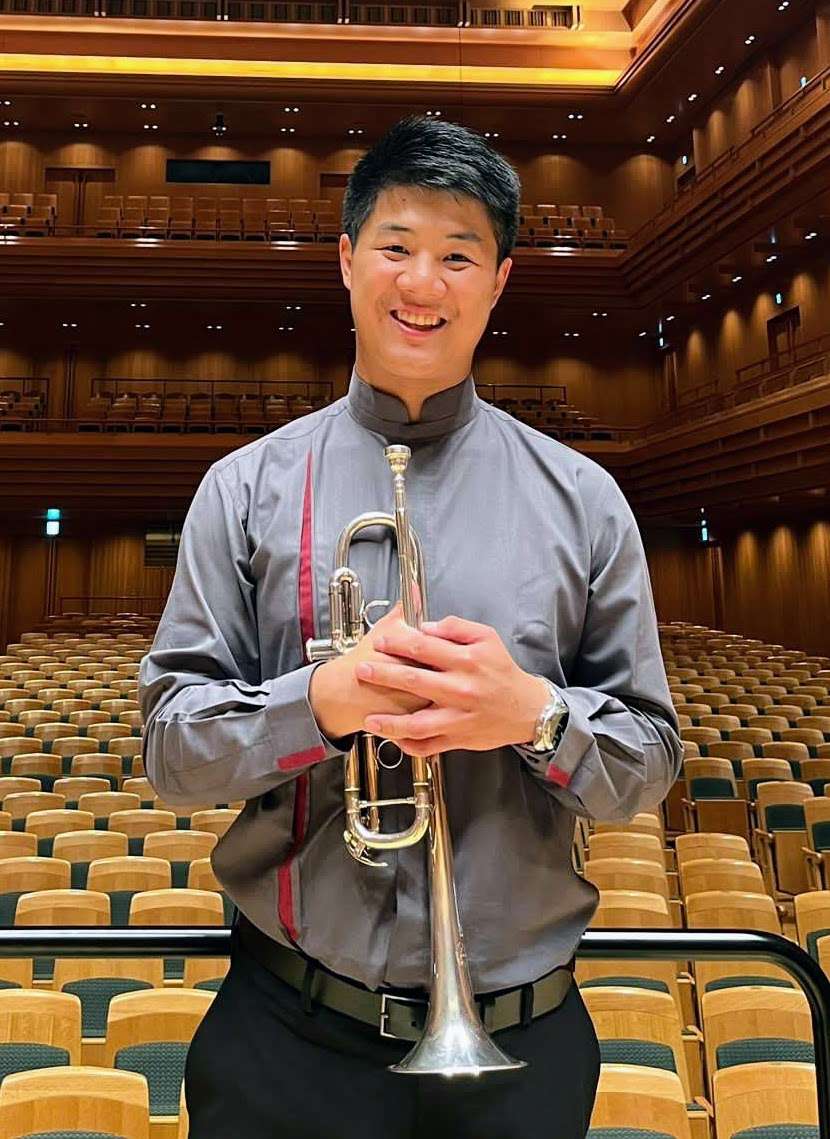


TBP: Congratulations on being accepted into the Asian Youth Orchestra! For those of you who have participated multiple times, what keeps you coming back?
Jeremy: The challenging and exciting repertoire allows me to be engaged and want to come back to the Asian Youth Orchestra. As a growing musician, taking auditions is part and parcel of our growth and the audition excerpts from this year’s season were one not to be missed. I am really fortunate to have been selected as one of the 6 percussionists in this year’s season!
Abner: I’d say what keeps me from coming back is the opportunity to perform with like-minded musicians. I’m also pushed to my limits as the repertoire is always challenging me. Plus, it’s also a chance for me to catch up with old friends over the summer! Chances like this don’t happen very often and I want to make the most of it.
TBP: The Asian Youth Orchestra is known for its prestigious reputation. What do you think sets this orchestra apart from other youth orchestras?
Jeremy: I feel that the uniqueness of the Asian Youth Orchestra brings forth a certain standard of musicians around Asia. Bringing cultural exchanges and musical influences among musicians. This is a great way to learn even more ideas and concepts from musicians around the world too.
Yan Liang: The Asian Youth Orchestra is unique in the sense that it brings together musicians from all over Asia. This allows for collaboration among very different cultures and backgrounds, and exchanging musical ideas further improves the rapport of the orchestra. The faculty comprises highly acclaimed musicians who have nurtured and developed numerous alumnus of the AYO, who have gone on to pursue illustrious careers.
TBP: Could you describe the audition process and how you prepared for it? What advice would you give to aspiring musicians aiming to join the orchestra?
Jeremy: The audition process was a fun one for me. When practicing each run-through, I always visualise myself in a proper live audition with panels and I make sure I record each take as well. This allows us to constantly improve and know what needs to be enforced and improved on in our practice sessions and mock auditions. Slow practice is really essential as we would want to get each excerpt or let alone a piece correctly thus I highly emphasise doing this.
Samuel: For the audition, we were tasked to prepare 1 concerto (15 mins) and 12-15 excerpts. But in reality, they only had time to listen to the first 2 mins and 2 excerpts (pictures at an exhibition and bolero). The best audition advice I’ve learned so far is to over-prepare and know your music inside out, be prepared to play with no warm-up at all, and smile/be friendly with the jury! They’re not just looking for the best musician, they’re probably also looking to see who’d be a joy to work with for 7 weeks, or for 70 years if you’re lucky!
Yan Liang: The audition process was a mental hurdle for me as I had to constantly remind myself to enjoy the process of the music-making while also maintaining a high quality and precision between each orchestral excerpt. One piece of advice I would like to share with aspiring musicians is always to be kind to yourself – don’t beat yourself up for not being perfect, and instead focus on telling a story and letting your voice be heard and felt.
Abner: The audition process for AYO is definitely not an easy one. Endurance is definitely something needed but the most important thing the panel is looking out for is how much music you can make in an audition tape. Personally, I did enjoy the challenge as I aspire to be the best version of myself. The advice I’d give musicians for auditioning to AYO? Don’t be disheartened. It took me 3 tries before I finally got accepted into AYO.
TBP: The repertoire of the orchestra is often diverse and challenging. Are there any particular pieces that stand out to you? Why?
Jeremy: Bolero, back in my secondary school days, I used to actually listen to Bolero to keep myself focused while studying for my exams. Something that is musically simple and calm is always the best sought-after therapy for me personally! Another would be West Side Story, having grown up listening to its tracks and watching Gustavo Dudamel’s engaging concerts with Mambo on YouTube has been something I’ve always wanted to perform with an orchestra. To be able to perform it this season along with many fantastic works, I am really grateful for the opportunity once again.
Samuel: Bolero, West Side Story, Porgy and Bess, and Pictures at an Exhibition are some of the many reasons why saxophonists have opportunities to play in the orchestra. So to all my composer friends out there reading this, please don’t forget us in your next orchestral commission 🔥🔥😂😂
TBP: What unique musical or cultural insights have you gained from working with musicians from all over Asia?
Abner: Over the past few times I have been to AYO, I always learn something new or make it a point to learn. Some musical insights I have personally gained would be the ability to adapt to different musicians and conductors. As music is personal to each individual, there are bound to be differing ideas and ways to express the music. As such, having an open mind to different styles always helps me learn how to overcome these challenges.
TBP: In what ways do you think Singapore can learn or benefit from the practices and experiences of the Asian Youth Orchestra?
Jeremy: The cultural differences and exchanges between section mates and colleagues from other sections are the best takeaways I gained from the entire experience. From the standpoint of learning more than just the repertoire, the benefits gained from the Asian Youth Orchestra allow us musicians to learn from each other in terms of how we approach, prepare, and execute each music in the repertoire. In the context of percussionists, what sound (bright, dull, dark, round etc) do we want in our instrument.
TBP: Travelling with the orchestra for an extended period can be both exciting and challenging. How do you manage the rigors of travel while maintaining your performance standards?
Jeremy: Proper ample rest, right diet, exercise if time permits!
Samuel: Gym more, sleep more, practice in the hotel room, and hope no one complains 😂
Yan Liang: Could not stress enough the importance of having ample rest and sleep during our off days. Even though it is necessary to work hard, it is equally important to rest as well.
Abner: Always having time to myself to allow myself to recharge. As much as I love making new friends and hanging out with them, it’s also important to look after myself.
TBP: What advice would you give to young musicians in Singapore who dream of being part of an international orchestra like the Asian Youth Orchestra?
Jeremy: Aim to achieve and believe in the process. Some of my friends took at least 3-5 tries to get into the orchestra. Never give up the life-changing opportunity we can get in our youth!
Yan Liang: While the process leading up to the audition may seem daunting, trust yourself and enjoy the journey! Having an open mind and a perpetual curiosity to learn will surely yield great results.
Wednesday, 14 August 2024
Esplanade Concert Hall, 7.30pm
$55, $35, $25, $15
[PROMO CODE: AYOSUPPORTERS24]
https://www.sistic.com.sg/events/youth0824
Asyahari Hussaini is a Singapore-based conductor and music educator actively working with wind bands across Southeast Asia. He currently directs school and youth ensembles while pursuing Masters in Music Leadership at the Yong Siew Toh Conservatory of Music. Known for his pedagogical approach blending Dalcroze, Kodály, and modern wind-band methods, he frequently serves as a clinician and adjudicator in regional festivals. Beyond music, he manages operations for SANS Institute in Singapore & Southeast Asia. He continues to champion youth music education and the development of strong community-based wind-band cultures.